Figuring out youth sock sizes is actually pretty simple. Most brands stick to a Small, Medium, and Large system that lines up with a kid’s shoe size. Generally, a Youth Small is for shoe sizes 10-13, a Medium covers shoe sizes 13-4, and a Large fits shoe sizes 4-7. It’s a great starting point for parents and coaches alike.
Your Quick-Reference Youth Sock Size Chart
When you’re trying to buy socks for a child—let alone an entire team—you don’t have time to play a guessing game. That’s why a solid size chart is your best friend. Below, I’ve put together a straightforward table to help you quickly match youth sock sizes with the right shoe sizes and typical age ranges.
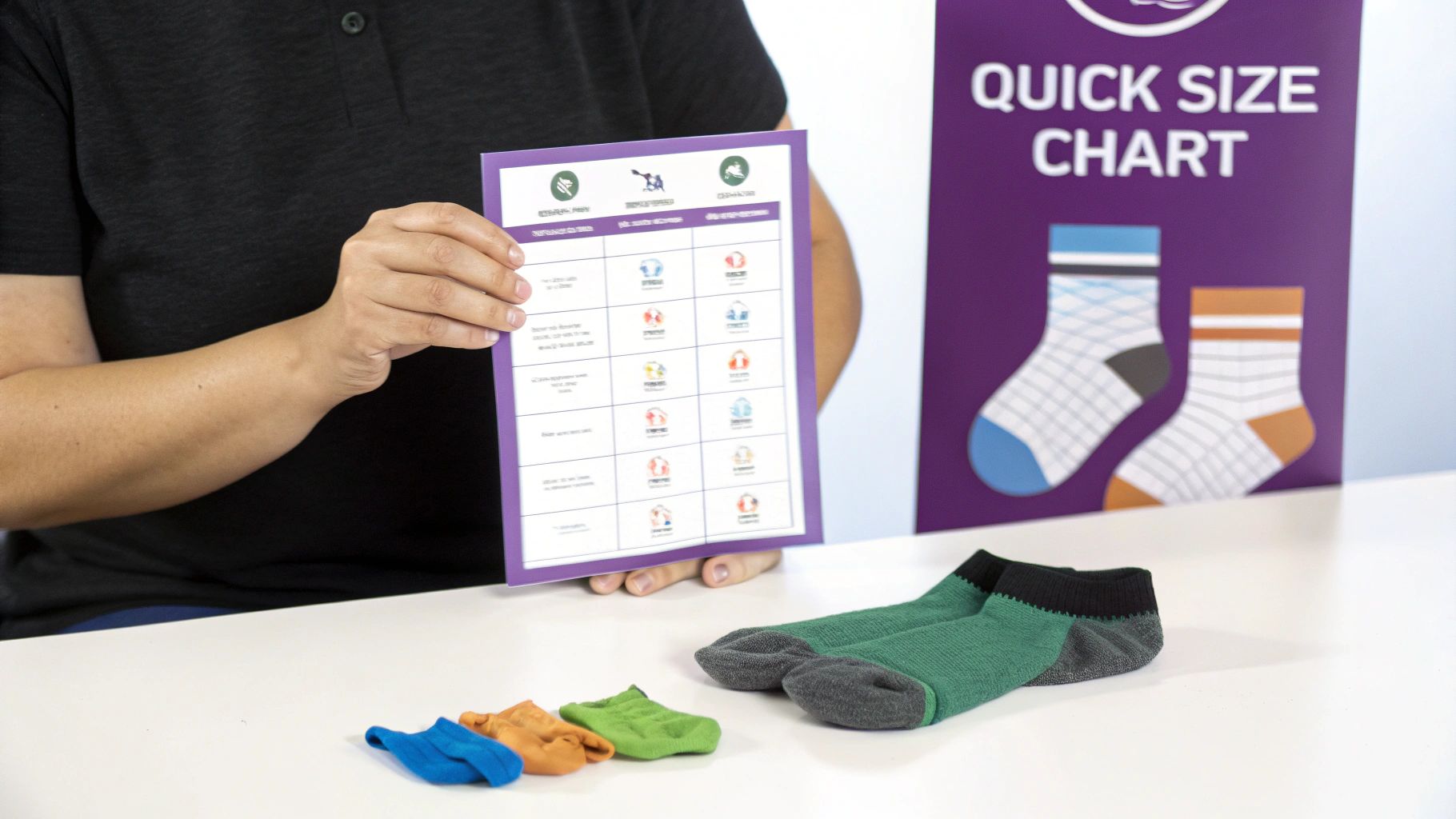
Use this as your go-to lookup tool for fast, confident decisions, whether you’re grabbing everyday crew socks or placing a bulk order for the local soccer league. It’s a dependable way to get the sizing right the first time.
Youth Sock Sizes At a Glance
Here’s a quick-lookup table to make things even easier. Just find your child’s US shoe size in the middle column to see which sock size you should be grabbing.
| Sock Size |
Youth Shoe Size (US) |
Approximate Age Range |
| Small (S) |
10C – 13C |
4 – 6 Years |
| Medium (M) |
1Y – 4Y |
6 – 8 Years |
| Large (L) |
4Y – 7Y |
8 – 12+ Years |
One pro tip: Kids’ feet grow like weeds. If they’re right on the edge of a size, it’s almost always a good idea to size up. A little extra room is way better than a sock that’s too tight.
While this chart is a great shortcut, keep in mind that sizing can vary a bit from brand to brand. For a truly perfect fit, nothing beats actually measuring the child’s foot.
How to Make Sense of Youth Sock Sizing Labels
Ever walk down the sock aisle and feel like you need a secret decoder ring? Some packages have letters like ‘S’, ‘M’, and ‘L’, while others use number ranges like 7-9 or 9-11. Getting a handle on what these mean is the key to finding the right fit without turning every shopping trip into a guessing game.
This is especially true whether you’re a parent trying to buy the right size online or a coach ordering custom socks for the whole team.
Most brands keep it simple by sorting youth socks into three main categories. While you’ll find slight differences from brand to brand, they almost always line up with a specific range of shoe sizes, which makes them a pretty reliable place to start.
- Youth Small (S): Generally fits kids’ shoe sizes 10C-13C.
- Youth Medium (M): Made for shoe sizes 1Y-4Y.
- Youth Large (L): Designed for older kids with shoe sizes 4Y-7Y.
This letter system is what you’ll see most often for everyday athletic and casual socks. But sometimes, you’ll run into numerical sizing, and that’s where things can get a little confusing.
Understanding Numerical Sock Labels
When you see a label like “Sock Size 9-11,” it’s not talking about age or shoe size. It’s actually a throwback to an older system where the number represented the length of a person’s foot in inches. So, a sock labeled 9-11 was originally made for a foot between 9 and 11 inches long.
Thankfully, you don’t need to carry a tape measure anymore. Over time, this system has been standardized to align with modern shoe sizes. A youth sock size 7-9, for example, usually corresponds to a Youth Medium, while a 9-11 often lines up with a Youth Large. Just remember to double-check the brand’s size chart, because this is where you can run into inconsistencies.
The kids’ sock market is surprisingly huge—it hit USD 8.2 billion in 2023 and is expected to reach USD 14.7 billion by 2033, with North America leading the charge. You can read the full research about the children’s sock market to see just how fast it’s growing. This explosive growth just goes to show how critical accurate sizing is, especially when you’re placing a bulk custom order for a team or event where comfort and performance really matter.
Pro Tip: If a sock package gives you both a letter size (like Medium) and a numerical size (like 7-9), always go with the shoe size range listed on the package. That’s your most reliable guide to getting the perfect fit.
How to Properly Measure a Child’s Foot for Socks
While age and shoe size charts are a fantastic starting point, nothing beats an old-fashioned foot measurement to guarantee a perfect fit. Taking just a few minutes to measure your child’s foot ensures you’re picking the right youth sock sizes every single time, preventing the discomfort that comes from socks that are too tight or bunch up inside their shoes.
The best part? You don’t need any special equipment. All it takes is a piece of paper, a pen or pencil, and a ruler or tape measure. This simple process eliminates all the guesswork and is hands-down the most reliable way to find your child’s true sock size.
If you’re ever standing in a store aisle completely stumped by the packaging, this little diagram can help you decode the label.
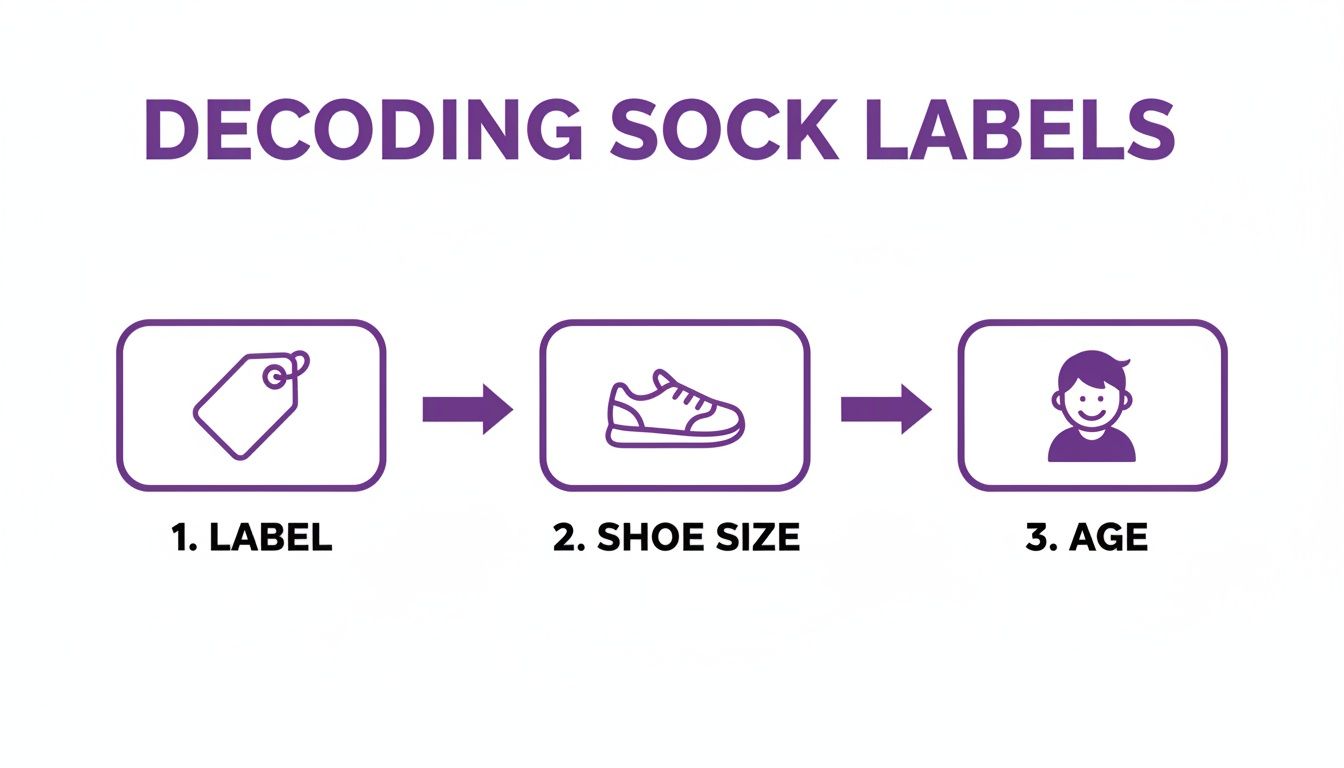
It’s all about cross-referencing what’s on the package with the child’s shoe size and age to land on the right pair with confidence.
The Step-by-Step Measurement Process
Follow these four simple steps to get an accurate measurement. Pro-tip: try to do this at the end of the day, when feet are naturally a bit swollen from running around. This ensures the socks will still be comfortable even after a long day of play.
- Trace the Foot: Have your child stand on a piece of paper with their heel gently touching a wall. Make sure they’re putting their full weight on their foot—this is key for getting an accurate outline. Then, carefully trace around their entire foot.
- Measure Both Feet: Believe it or not, it’s super common for one foot to be slightly larger than the other. Repeat the tracing process for the other foot to make sure you’re buying for the bigger one.
- Mark the Longest Points: On each of the tracings, draw a straight line from the furthest point of the heel to the very tip of the longest toe.
- Record the Measurement: Grab your ruler or tape measure and find the length of that line in inches or centimeters. Always use the measurement from the larger foot as your guide.
Key Takeaway: Always measure both feet and use the bigger measurement when you’re looking at a size chart. It’s a fact that a huge percentage of kids are wearing shoes (and by extension, socks) that are too small, which can actually impact how their feet develop.
Once you have this precise measurement, you can use it with any brand’s size chart and feel totally confident in your choice. For more detailed conversions and charts, check out our complete guide to sock sizing. It’ll help you translate your measurement into US, UK, and EU shoe sizes, so you’re covered no matter where you shop.
The Comprehensive Youth Sock Size Conversion Chart
Sometimes, a quick estimate just won’t cut it. For those moments, this comprehensive conversion chart is your best friend. It’s designed for total clarity, whether you’re a parent buying from an international brand or a coach outfitting a team with players from all over. Think of it as your secret weapon for translating measurements into the perfect fit.
Unlike our quick-reference table, this chart dives deep, including conversions for US, UK, and EU shoe sizes, plus foot lengths in both inches and centimeters. That level of detail is exactly what you need to make sure every kid gets a comfortable, high-performance sock, taking all the guesswork out of online or bulk orders.
Detailed Youth Sock Size Conversions
Use this chart as your single source of truth for all things youth sock sizing. Just find the child’s foot length or their shoe size in any major system, and you’ll know exactly which sock size to grab.
| Foot Length (Inches) |
Foot Length (cm) |
US Shoe Size |
UK Shoe Size |
EU Shoe Size |
Recommended Sock Size |
| 6.5″ – 7.5″ |
16.5 – 19.1 |
10C – 13C |
9.5 – 12.5 |
27 – 31 |
Small (S) |
| 7.6″ – 8.5″ |
19.2 – 21.6 |
1Y – 4Y |
13 – 3.5 |
32 – 36 |
Medium (M) |
| 8.6″ – 9.5″ |
21.7 – 24.1 |
4Y – 7Y |
3.5 – 6.5 |
36 – 39 |
Large (L) |
Getting these conversions right is a bigger deal than you might think. A sock that’s too small will feel tight and restrictive, while one that’s too large is a recipe for blisters and annoying bunching. If you want to dive even deeper into how sock and shoe sizes relate across all age groups, check out our detailed sock size vs shoe size chart.
With this data in hand, you can order with total confidence, knowing every single pair will fit perfectly right out of the package.
Finding the Right Sock Size by Age and Shoe Size
While getting out a ruler for an exact foot measurement is always the gold standard, let’s be realistic—sometimes you just need a quick, reliable answer. Using a child’s age and their current shoe size is an incredibly solid way to figure out their sock size, especially when you’re buying a gift or just don’t have a tape measure handy.
Think of it as a trusted shortcut. For example, if you know a kid is seven years old and wears a size 2Y shoe, you can confidently grab a Medium sock. This simple link between age, shoe size, and sock size is the backbone of most sizing charts you’ll find, making it a lifesaver for fast, accurate decisions.
Sizing for Toddlers and Young Children
For the little ones, foot growth happens in the blink of an eye. Their sizing needs change constantly, which makes using their age and shoe size a much more practical approach than trying to measure their wiggly feet every other month.
- Ages 4-6 (Toddler/Little Kid): At this stage, kids typically wear shoe sizes from 10C to 13C. This range lines up perfectly with a Youth Small (S) sock. A good fit here is a big deal, since they’re constantly running, jumping, and developing their coordination.
- Ages 6-8 (Little Kid): Once they hit early elementary school, their feet have usually grown into shoe sizes 1Y to 4Y. This group fits squarely into a Youth Medium (M) sock.
This predictable growth pattern is a massive driver in the sock industry. In fact, North America alone accounts for a whopping 40% share of the global kids’ sock market, which is only expected to keep growing. As kids’ feet size up—from US sizes 10-3 for the 4-8 crowd to sizes 4-7 for tweens—parents are constantly buying new socks, fueling huge demand for everything from everyday pairs to custom team and event socks. You can dive deeper into these kids’ sock market trends on cognitivemarketresearch.com.
Sizing for Pre-Teens and Older Youth
When kids enter their pre-teen years, their foot growth might slow down a bit, but getting the right size is just as important for comfort, especially during sports and other daily activities.
- Ages 8-12+ (Big Kid): This older group generally wears shoe sizes ranging from 4Y to 7Y. They’ll need a Youth Large (L) sock to keep them comfortable. It’s around this time that some kids, especially those wearing a size 6Y or 7Y shoe, might even start to fit into an adult small sock.
Important Guideline: Keep in mind that these age and shoe size ranges are fantastic guidelines, but they aren’t set in stone. Every child grows at their own unique pace. If a kid is tall for their age or just has naturally larger feet, they might need to size up sooner than their friends. When in doubt, always prioritize a comfortable fit over sticking to a strict age category.
Smart Strategies for Bulk Sock Orders
Outfitting an entire team, school, or event with custom socks can feel like a massive headache, but a little planning goes a long way. Just guessing sizes is a recipe for disaster—you’ll inevitably end up with some kids squeezed into socks that are too tight and others with pairs bunching up in their shoes. The real key is ordering a smart mix of youth sock sizes based on the group’s general age range.
A simple formula can help you avoid ordering way too many of one size and not nearly enough of another. The best-case scenario is gathering a list of shoe sizes, but even if you only have ages to work with, you can still make a surprisingly accurate estimate. This approach turns a logistical nightmare into a smooth, straightforward process.
Estimating Your Size Breakdown
For a typical youth group between the ages of 8 and 12, most kids will fall squarely into the Youth Medium and Large sock sizes. A safe and effective strategy is to think of your order like a bell curve, concentrating the bulk of your quantity on those middle sizes.
Pro Tip: Always order a few extra pairs, especially in the most common sizes. Having about 10-15% extra on hand is a lifesaver for those last-minute team additions, sizing mishaps, or the inevitable lost sock mid-season.
Let’s walk through a sample order for a youth soccer team of 50 players, mostly ages 9-11. A good breakdown would look something like this:
- Youth Small: 5 pairs (10%) – This covers any younger siblings or smaller players on the team.
- Youth Medium: 20 pairs (40%) – This will cover the core of the younger end of your age range.
- Youth Large: 25 pairs (50%) – This is the sweet spot for this group, covering the older, bigger players.
This balanced approach ensures you’re ready for just about everyone on game day. Figuring out how to save some money on a large order also makes a huge difference, so it’s worth checking out our guide on the benefits of buying wholesale socks.
This constant need for new sizes is no surprise, especially when you remember that kids’ feet can grow half a size every 3-6 months. This rapid turnover means parents are often replacing socks multiple times a year, driving a steady demand for correctly sized athletic gear each season. By planning your bulk order strategically, you can meet that demand perfectly.
Common Questions About Youth Sock Sizing
Even with the perfect chart in hand, you’re bound to run into a few tricky sizing situations. Real life, with its growth spurts, unique foot shapes, and that awkward transition into adult sizes, doesn’t always fit neatly into a table. This section is here to give you straight answers to those common troubleshooting questions.
Think of this as your quick-reference guide for handling those last-minute sizing puzzles. Whether you’re a parent trying to keep up with your kid’s feet, a coach placing a bulk order, or just buying a gift, these answers will help you navigate the most frequent challenges with confidence.
What Should I Do If My Child Is Between Sizes?
When a child’s foot lands right on the line between two sizes, the golden rule is to size up. It’s always better to have a sock that’s a little too big than one that’s too small. A slightly larger sock gives them much-needed room to grow and is way more comfortable than a sock that’s squeezing their toes.
Most quality socks have enough stretch built in to handle a slightly larger fit without bunching up inside their shoes. This is especially true for athletic socks, where a comfortable, proper fit is everything on the court or field. A little extra space is always better than a cramped foot.
Is There an Overlap Between Youth and Adult Sock Sizes?
Yes, absolutely! Knowing where this overlap happens is key, especially for older kids and pre-teens. Youth sock sizing generally tops out at a Large (L), which usually covers youth shoe sizes 4Y to 7Y. This is precisely where adult sizing kicks in.
An adult Small (S) sock is typically designed to fit a women’s shoe size 4-6 or a men’s 5-7. So, a kid who wears a youth shoe size 6Y or 7Y can often comfortably wear an adult Small sock. Just remember to double-check the specific brand’s size chart, as this transition point can differ.
Key Insight: When a child’s foot hits that 4Y-7Y shoe size range, you suddenly have two great options: a Youth Large or an Adult Small. This is super helpful when a specific style or color you want is only available in adult sizes.
How Does Sock Style Affect the Fit?
The style of the sock—whether it’s crew, ankle, or knee-high—doesn’t change the basic foot sizing (Small, Medium, or Large). However, it definitely changes how the sock fits on the leg and calf. For example, a knee-high sock needs to have enough length and stretch to stay up without digging into the calf.
If you’re ordering a specialty style like knee-highs for a team, it’s a good idea to think about the general age and build of the players. Sock materials that blend cotton or performance fibers with spandex are perfect because they offer that extra give to fit a wider range of calf sizes comfortably.
Does a Child with Wide Feet Need a Bigger Sock Size?
For the most part, no. Sock sizing is almost entirely based on foot length, not width. Modern socks are designed with stretchy materials like spandex and elastane, which allows a standard-sized sock to easily accommodate wider feet without feeling tight.
The only time you might consider sizing up is if the child is already at the very top end of the length range for that size. Otherwise, the standard size that matches their shoe size should provide a secure and comfortable fit. For even more answers, check out these frequently asked sock questions.
Ready to create the perfect socks for your team, event, or business? At Custom Sock Shop, we make it easy to design high-quality, comfortable socks right here in the USA. Get started today and see your vision come to life at https://customsockshop.com.