What Is Moisture Wicking Fabric & How Does It Work?
Vanessa Cromwell
At its core, moisture-wicking fabric is a smart textile designed to pull sweat away from your skin and move it to the fabric’s outer surface, where it can evaporate almost instantly. This technology is the secret sauce that keeps you dry and comfortable, unlike old-school absorbent materials like cotton.
What Is Moisture Wicking Fabric, Anyway?
Think of moisture-wicking fabric as a high-tech plumbing system for sweat. Instead of acting like a sponge that just soaks up moisture and holds it against you (hello, cotton!), it functions more like a network of microscopic straws.
This network is constantly drawing liquid up and out, away from your skin. This process, known as capillary action, is what separates high-performance athletic gear from a standard t-shirt you’d find in a multipack.
A cotton shirt, for example, can absorb up to 7% of its weight in moisture. This leaves you feeling heavy, damp, and eventually chilled. In stark contrast, a synthetic wicking material like polyester holds only about 0.4%, pushing the rest away from your body so it can disappear.
From Discomfort to Performance
The goal is simple: keep your skin as dry as possible. By whisking sweat away from your body, these fabrics help you in a few key ways:
Regulate Body Temperature: Evaporation is your body’s natural air conditioning. Wicking fabrics supercharge this process, helping you stay cool when you’re working hard.
Prevent Chafing and Blisters: Dry skin means less friction. Less friction means you can say goodbye to painful chafing and blisters, especially in socks and activewear.
Maintain Lightweight Comfort: You avoid that heavy, soggy feeling that comes with sweat-soaked clothes, allowing you to move freely without being weighed down.
The magic isn’t just in the material itself but in the way it’s woven. High-tech patterns create tiny channels that force moisture through the gaps to the outer shell, where it vanishes into the air.
To give you a clearer picture, here’s a quick breakdown of what makes these fabrics so effective.
Moisture Wicking Fabric At a Glance
Key Feature
What It Does
Primary Benefit
Capillary Action
Pulls sweat from skin to the fabric’s surface.
Keeps you feeling dry and comfortable.
Low Absorption
Resists soaking up moisture like a sponge.
Prevents that heavy, waterlogged feeling.
Quick Evaporation
Spreads moisture out for rapid drying.
Helps regulate your body temperature.
Breathable Weave
Allows air to circulate freely through the fabric.
Reduces overheating and clamminess.
Ultimately, understanding the difference between fabrics is crucial for comfort, whether you’re choosing high-performance gear or just a great pair of everyday socks.
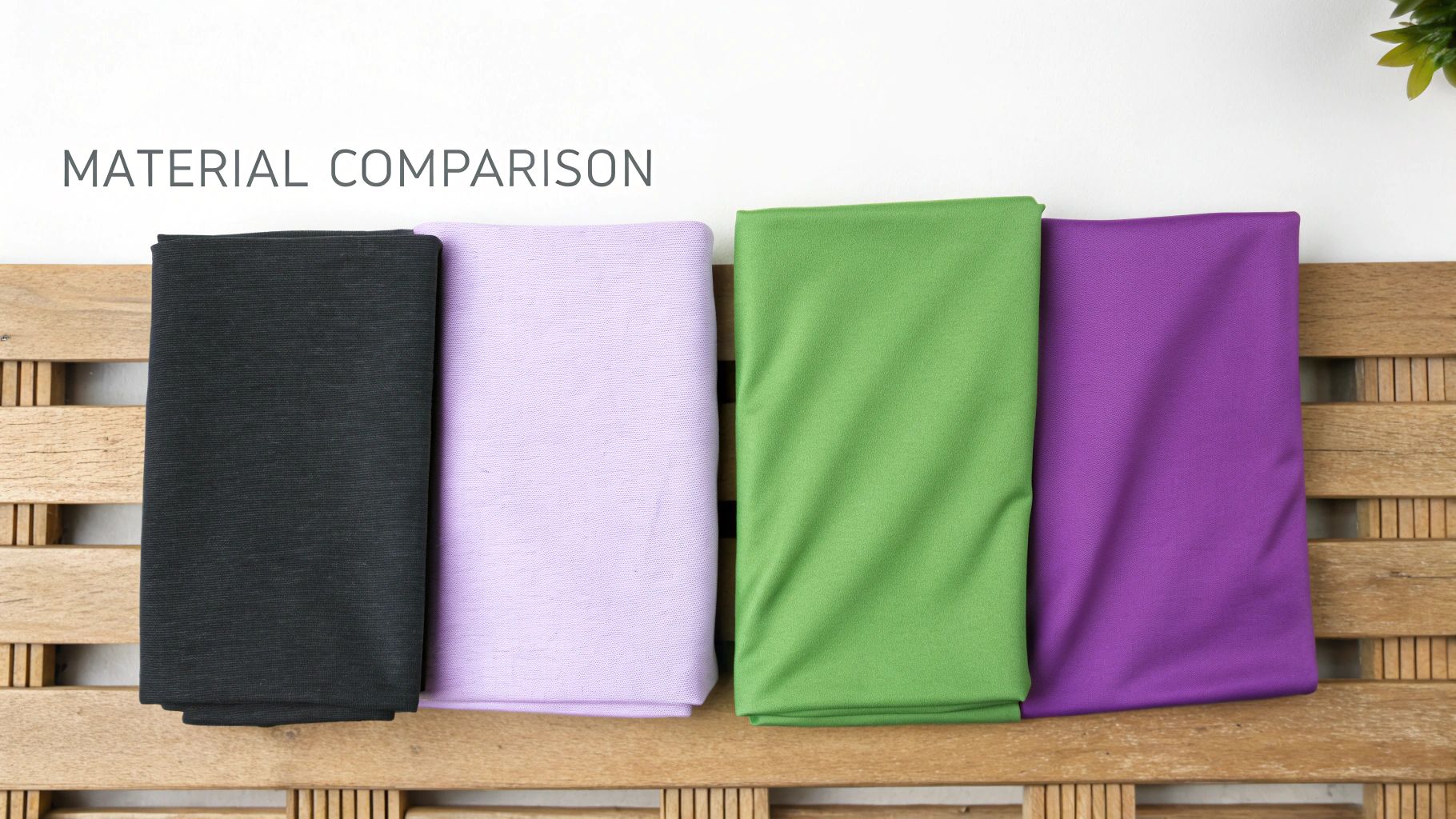
To see how various materials really stack up against each other, you can explore this detailed sock material comparison guide. This kind of foundational knowledge will help you pick gear that actually boosts your performance instead of getting in your way.
The Science of Staying Dry: How Wicking Works
So, what’s the secret behind moisture-wicking fabric? It all comes down to a neat little scientific principle called capillary action. This is the same force you see at work when a paper towel magically soaks up a spill or when a plant pulls water from its roots all the way up to its leaves. It’s nature’s own plumbing system, and modern textiles have figured out how to use it to our advantage.
Wicking fabrics are engineered with thousands of microscopic, hollow channels woven right into the material. When you start to sweat, that moisture gets pulled into these tiny channels. The fabric’s structure naturally draws moisture away from areas of high concentration (your skin) and moves it toward areas of low concentration (the fabric’s outer surface).
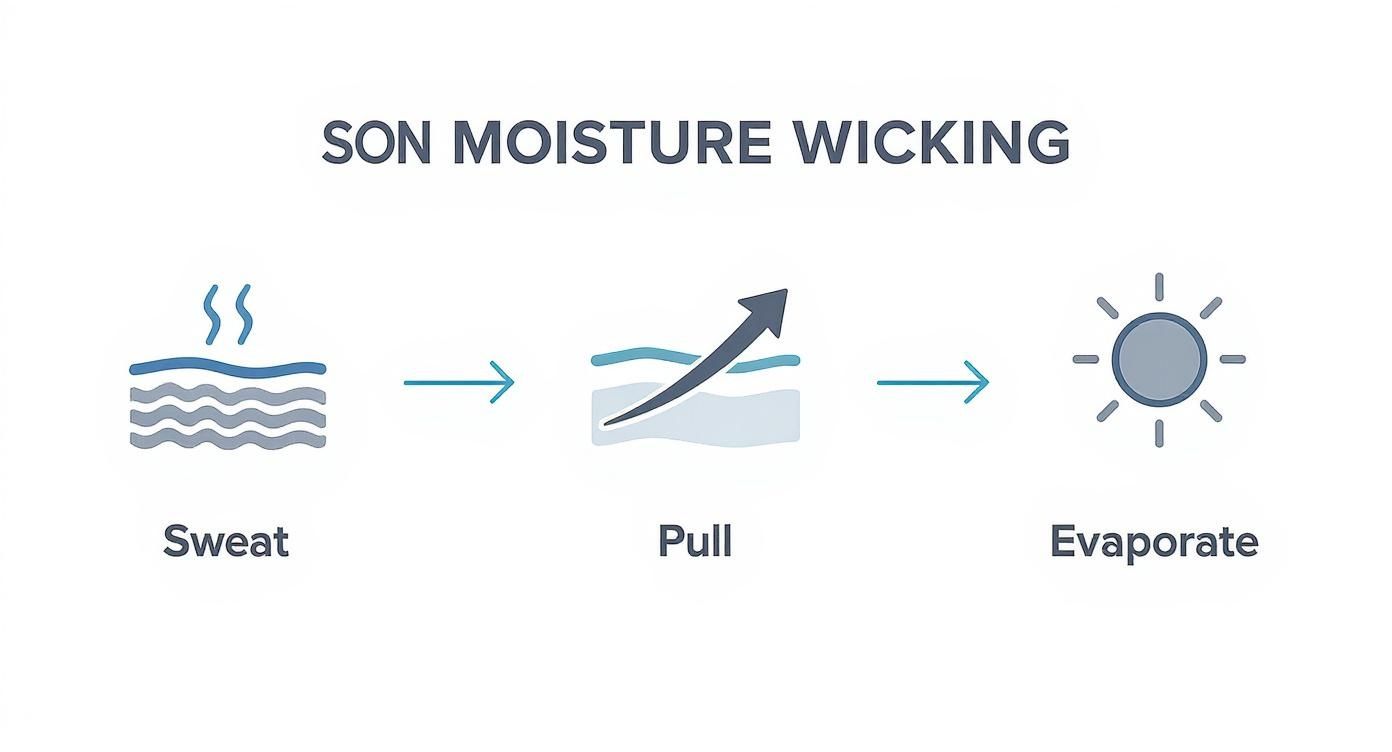
This simple infographic breaks down the three-step journey your sweat takes to keep you dry and comfortable.
As you can see, it’s a non-stop cycle: pull moisture away, push it to the surface, and let it evaporate. Simple, yet incredibly effective.
The Push-Pull System
The best performance fabrics take this concept a step further with a clever dual-layer design. Think of it as a sophisticated “push-pull” system that’s obsessed with keeping you dry.
Here’s how this two-part structure works:
The Inner “Pull” Layer: The layer touching your skin is made from hydrophilic (water-loving) fibers. Their job is to actively pull sweat right off your skin and into the fabric’s core, giving you that immediate feeling of dryness.
The Outer “Push” Layer: The exterior is made from hydrophobic (water-hating) fibers. Once moisture gets to this outer layer, these fibers aggressively push it to the surface and spread it out, which helps it evaporate much faster.
This one-two punch is what makes these fabrics so good at their job. They don’t just move moisture around; they actively manage it by yanking it away from you and then forcefully shoving it out into the air.
This intelligent design is precisely why a polyester performance shirt feels so different from a soggy cotton tee. Cotton absorbs and holds onto an incredible 7% of its weight in water. Performance polyester, on the other hand, holds a mere 0.4% and gets rid of the rest.
This system is built to keep you dry, light, and comfortable, whether you’re crushing a marathon or just running errands on a hot day. The science isn’t just about avoiding a little dampness—it’s about fundamentally improving performance and comfort from the ground up.
What Are The Best Moisture Wicking Materials?
Let’s be real: not all fabrics that promise to keep you dry are created equal. When you’re picking out your gear, understanding the key players is the difference between genuine comfort and a sweaty, swampy mess. The world of wicking fabrics is dominated by a few reliable workhorses and some surprisingly powerful natural contenders.
At the top of the list are synthetics like Polyester and Nylon. These materials are industry titans for a reason. They’re exceptionally durable, naturally hydrophobic (meaning they repel water), and can be engineered into complex weaves that maximize that all-important capillary action. They form the backbone of most high-performance activewear, from running shirts to athletic socks.
The demand for comfortable, performance-driven apparel is massive. The market for moisture-wicking fabrics was valued at $4.16 billion and is only expected to grow as more people discover the benefits of these advanced textiles.
Synthetics vs. Naturals
While synthetics are engineered for peak performance, some natural fibers bring their own unique advantages to the table. This is where the debate often gets interesting.
Synthetics (Polyester, Nylon, Spandex): These are the undisputed champions of moisture management and durability. Spandex (or Lycra) is almost always blended in to provide that crucial stretch and shape retention, ensuring a snug, comfortable fit that moves with you.
Natural Fibers (Merino Wool, Bamboo): Don’t count out nature just yet. Merino wool is an absolute standout, offering incredible temperature regulation and natural odor resistance right alongside its impressive wicking capabilities. Unlike its scratchy cousins, its fibers are ultra-fine, soft, and itch-free. Bamboo is another popular choice, loved for its silky feel and sustainable origins.
The real secret weapon isn’t a single material but a strategic blend. Combining the wicking power of polyester with the stretch of spandex and the odor-fighting properties of merino wool creates a truly superior garment.
Comparing Moisture Wicking Fabric Materials
To make it easier, we’ve broken down the most common materials, highlighting their strengths and where they really shine.
Material
Key Advantage
Best For
Polyester
Durability & Affordability
All-around athletic wear, team uniforms, everyday socks.
Nylon
Lightweight & Resilient
High-performance gear, running apparel, and items needing extra toughness.
Spandex
Stretch & Shape Retention
Blended into almost all performance wear for a snug, flexible fit.
Merino Wool
Temperature Regulation & Odor Resistance
Hiking, winter sports, and socks for all-season comfort.
Bamboo
Softness & Sustainability
Casual wear, base layers, and anyone with sensitive skin.
Ultimately, the best fabric for you comes down to what you’re doing. A marathon runner needs something different than a hiker or someone just looking for comfortable socks for a long day at the office.
For a deeper dive into how one of these natural wonders performs in footwear, check out our guide on the benefits of merino wool socks. Choosing the right material—or the perfect blend—is the first step toward keeping your feet dry, comfortable, and ready for absolutely anything.
The Real-World Benefits of Wicking Apparel
Sure, staying dry is nice, but that’s just scratching the surface. The real magic of moisture-wicking fabric is how it completely changes your comfort and performance. It’s not just about dodging a damp shirt; it’s about creating a better, more efficient environment for your body to do its thing.
One of the biggest wins is superior temperature regulation. Think about it: during a tough workout, your body sweats to cool down. Wicking apparel puts that process into overdrive by pulling sweat away from your skin so it can evaporate in a flash, giving you a constant cooling effect. And in the cold? That same technology is your best friend, preventing that dangerous, bone-deep chill you get from sweat-soaked layers clinging to your skin.
This focus on smarter performance wear has caught on in a big way. The global market for moisture-wicking fabrics was valued at $2.82 billion and is only expected to grow as more people focus on health and wellness. You can dig into the numbers yourself over at The Business Research Company.
Health and Comfort Advantages
Beyond just keeping you at the right temperature, these fabrics deliver some serious health benefits by keeping your skin dry, especially in high-friction zones.
Less Chafing: Dry skin glides. Wet skin sticks. It’s that simple. By keeping you dry, wicking fabric drastically cuts down on painful chafing during repetitive movements like running or cycling.
No More Blisters: For your feet, this is an absolute game-changer. Wicking socks pull moisture away, minimizing the friction that turns a great workout into a blister-filled nightmare. This is the main reason people ditch their old cotton socks.
Happier Skin: A damp, swampy environment is a breeding ground for rashes and irritation. Wicking fabrics help maintain a healthier skin biome by cutting down on that prolonged moisture exposure.
The right fabric is the difference between crushing your last mile and getting sidelined by discomfort. It’s the foundation of any serious performance gear.
At the end of the day, your gear has a huge impact on your entire activity. For anyone who moves their body, choosing the right pair of custom performance socks is the first step toward building a comfortable, blister-free foundation for any workout.
How to Choose and Care for Wicking Fabrics
Getting the most out of your high-performance gear means knowing how to pick the right stuff in the first place—and just as importantly, how to keep it from losing its magic. Choosing the best moisture-wicking fabric really comes down to your activity, the climate you’re in, and what feels good to you.
When you’re shopping, flip over the tag and look for keywords like “dry-fit,” “performance,” “fast-drying,” or “sweat-wicking.” These aren’t just marketing buzzwords; they signal that the fabric has been specifically engineered to handle sweat. For a great all-around choice, you can’t go wrong with a polyester blend that has a bit of spandex mixed in—it gives you that perfect combination of durability and stretch for workouts.
Preserving Your Gear’s Wicking Power
Once you’ve found the perfect gear, a little bit of care goes a long way. You have to protect the moisture-moving technology woven right into the fibers, and a few simple habits can make all the difference.
To keep your wicking fabrics performing at their peak, just follow these simple rules:
Skip the Fabric Softener: This is the big one. Fabric softeners coat fibers with a waxy residue that clogs up the micro-channels in the material. It completely destroys the fabric’s ability to pull moisture away from your skin.
Wash in Cold Water: High heat is the enemy of delicate synthetic fibers. A cold wash is much gentler on your gear and gets it just as clean.
Air-Dry When Possible: Just like hot water, the intense heat from a dryer can degrade the fibers and kill their wicking properties over time. If you absolutely have to use a dryer, always use the lowest heat setting available.
Proper maintenance ensures your investment continues to pay off in comfort and performance. Ignoring these simple steps can turn a high-tech garment into a plain old shirt surprisingly quickly.
These tips are especially critical for items that see the most action, like your socks. For a more detailed breakdown, check out our comprehensive guide to caring for your custom socks to keep them in top shape for years to come.
Common Questions About Moisture-Wicking Fabrics
Even after you get the basic idea, a few questions always seem to pop up about moisture-wicking fabrics. Let’s clear the air on some of the most common ones so you can make smarter choices about your gear.
Most of the confusion usually starts with a classic, everyday material that people assume is great for everything.
Is Cotton a Moisture-Wicking Fabric?
In a word? No. In fact, cotton is the exact opposite of moisture-wicking. It’s incredibly absorbent, meaning it soaks up sweat like a sponge and holds all that dampness right against your skin.
Sure, it feels soft and breathable when it’s dry, but cotton can absorb up to 7% of its weight in water. This makes it feel heavy and clammy once you start sweating. In cool weather, that wet fabric can even cause a dangerous chilling effect—which is exactly why “cotton kills” is a common warning among hikers.
Think of it this way: wicking fabrics are designed to move water, while cotton is designed to hold it. For performance and comfort during any activity, you always want movement over absorption.
Honestly, this one major flaw is the whole reason high-tech synthetic fabrics were invented in the first place.
Can Wicking Fabrics Stop Working Over Time?
Absolutely. The wicking power of your gear can definitely fade if you don’t take care of it properly. The number one enemy of performance fabric is fabric softener. It leaves behind a waxy film that clogs the tiny micro-channels in the fibers, essentially blocking the pathways sweat needs to escape.
Blasting your gear with high heat in the dryer can also damage those delicate synthetic fibers over time, making them less effective. The secret to keeping your apparel working as intended is simple: just follow the care instructions. A little care goes a long way.
Are All Synthetic Fabrics Moisture-Wicking?
Not necessarily, and this is a big misconception. While materials like polyester and nylon are naturally hydrophobic (meaning they repel water), their ability to wick moisture comes down to how the fabric is constructed.
To actually wick, the fibers have to be woven into a specific channel-like structure that creates the capillary action we talked about earlier. A tightly woven, unstructured polyester shirt might not wick sweat at all. It proves that the engineering of the fabric is just as crucial as the material itself.
At Custom Sock Shop, we build our performance socks with the right materials and the right construction to guarantee your feet stay dry and comfortable. Design your perfect pair today at https://customsockshop.com
First Time Here?
10% Off
Claim 10% off your first order, just for being new here. It’s our way of saying welcome.