So, what exactly is sublimation printing? At its core, it’s a fascinating chemical process that permanently fuses a design right into the fibers of a fabric. It’s not just ink sitting on top of the material—it’s ink that becomes part of the material.
The science is pretty cool. We take solid ink, apply intense heat, and it transforms directly into a gas, completely skipping the liquid stage. This gas then bonds with the polyester fibers of the fabric, making the design an integral part of the item itself. The result? A stunningly vibrant, full-color image that feels like it was always there. It’s the secret behind those incredibly detailed, all-over-print athletic jerseys and the reason our custom printed socks look so crisp and clear.
This unique fusion of ink and fabric is what gives sublimated products their signature soft feel and unmatched durability.
From a Lab Discovery to Your Favorite Apparel
This whole process wasn’t dreamed up overnight. The story of sublimation printing actually starts back in the 1950s with a French scientist named Noel de Plasse. While working for a textile company, he figured out how to turn solid dyes straight into a gas using heat. Seeing the potential, he founded Sublistatis SA to bring the idea to market.
By the early 1970s, the industry was on fire. Companies were churning out 24 million square meters of sublimation transfer paper every year, decorating a huge chunk of the world’s polyester fabrics. This scientific breakthrough laid the foundation for the modern customization world we know today, moving us beyond simple patterns to the complex, high-resolution graphics that were once impossible on fabric.
Before we dive deeper, here’s a quick rundown of what makes sublimation unique.
Sublimation Printing At A Glance
Characteristic
What It Means For You
Ink Infusion
The design becomes part of the fabric, not a layer on top. This means no cracking, peeling, or fading—ever.
Vibrant Colors
The process allows for millions of colors, creating photo-realistic, high-definition prints with amazing detail.
Durability
Since the ink is permanently bonded to the fibers, the design is as durable as the fabric itself. It can handle wash after wash.
Soft Feel
There’s zero “hand feel”—you can’t feel the ink on the surface. The fabric remains soft, breathable, and comfortable.
Polyester-Based
Sublimation works best on polyester or poly-blend fabrics, which is perfect for performance apparel and socks.
This table really highlights why this method is a go-to for high-quality, long-lasting custom goods.
Key Takeaway: Sublimation isn’t just printing on a product; it’s printing into it. The ink becomes one with the material, ensuring the design will never crack, peel, or fade away with washing and wear.
This permanence makes it the perfect choice for items that see a lot of action, like performance sportswear, custom lanyards, and, of course, durable socks designed to go the distance. The technology ensures that whether it’s a team logo or a detailed family photo, the design stays as vibrant as the day it was created. It’s a premium finish that stands up to the demands of daily life, setting the bar for custom apparel quality.
How The Sublimation Process Works Step By Step
Think of sublimation printing less like a science experiment and more like a high-tech magic trick. It’s the process that creates those unbelievably vibrant, permanent designs on custom apparel. Like any good recipe, it requires the right ingredients and a specific sequence to get that perfect, flawless result.
Let’s walk through the journey, from a digital file on a screen to a finished pair of socks that are ready to wear.
Step 1: Design And Print
It all starts on the computer. Before any ink touches paper, your design—whether it’s a high-res photo, a detailed logo, or a wild pattern—has to be finalized in a digital file. Once it’s perfect, we send it over to a specialized sublimation printer.
This isn’t your standard office printer. It’s loaded with unique sublimation inks, which are essentially solid dye particles suspended in liquid. The printer lays this ink onto a sheet of special sublimation transfer paper. Critically, the design is printed as a mirror image so it looks correct when it’s finally transferred onto the sock.
Step 2: Prepare The Substrate
Next up, we get the canvas ready. In the printing world, this is called the substrate. For our purposes, the substrate is a blank, high-quality pair of polyester socks. It has to be perfectly clean, completely dry, and laid out flat to ensure the design transfers evenly.
Even the slightest wrinkle or bit of moisture can mess up the process, creating blurry spots or gaps in the final print. We carefully align the printed transfer paper with the blank sock and secure them together with heat-resistant tape. This little step is crucial to make sure nothing shifts around during the next, most important phase.
Step 3: Apply Heat And Pressure
This is where the magic happens. The sock and transfer paper combo is placed into a heat press, a machine that clamps down with precise temperature and pressure. We crank the heat up to somewhere between 350-400 degrees Fahrenheit.
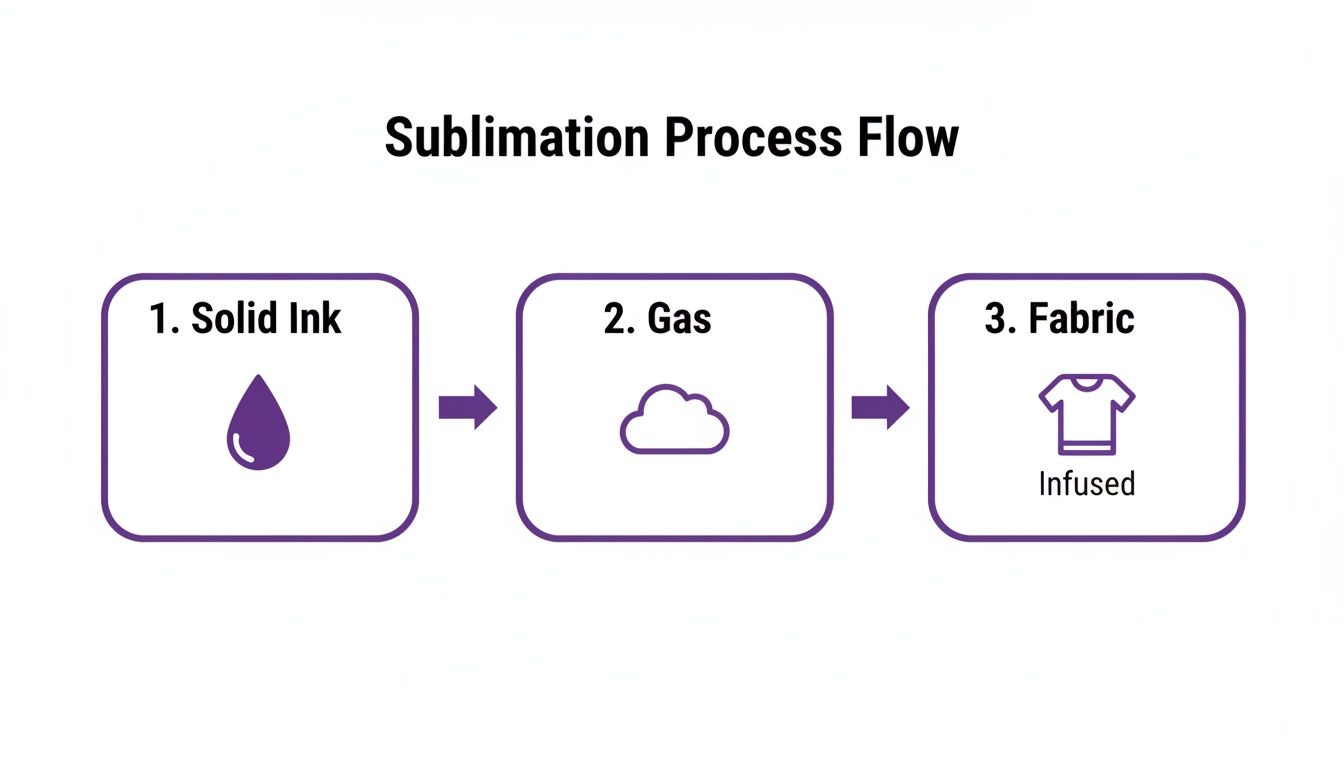
This intense heat triggers the “sublimation” reaction. It causes the solid dye particles on the paper to turn directly into a gas, completely skipping the liquid phase. At the exact same time, the heat opens up the pores of the polyester fibers in the sock, making them ready to absorb the ink.
This diagram shows how that simple but powerful transformation works.
As you can see, the ink doesn’t just sit on top of the material—it becomes one with it.
Step 4: The Final Reveal
After a short time in the heat press, the sock is carefully removed. As it cools down, the polyester fibers close back up, permanently trapping the gasified ink inside the fabric itself. We then peel away the transfer paper, revealing a stunningly crisp and vibrant design.
The Result: The ink is now a permanent part of the sock’s fibers. You can’t feel it, it won’t crack or peel, and it will never fade, no matter how many times you wash it. The design is literally as durable as the fabric it’s printed on.
This entire process is key to understanding not just how these custom socks are made, but how modern apparel customization can achieve such incredible detail and longevity. If you’re curious to see how this fits into the bigger picture, check out our deep dive on how custom socks are made. It’s a fascinating look at all the craftsmanship that goes into every single pair.
The Essential Toolkit For Flawless Sublimation
Getting that perfect, photo-quality finish with sublimation isn’t just about having a great design. It’s a bit like a chef’s kitchen or an artist’s studio—you need a specific set of tools working together in perfect harmony. Once you understand the toolkit, you can really appreciate the investment and expertise behind every vibrant, custom-printed product.
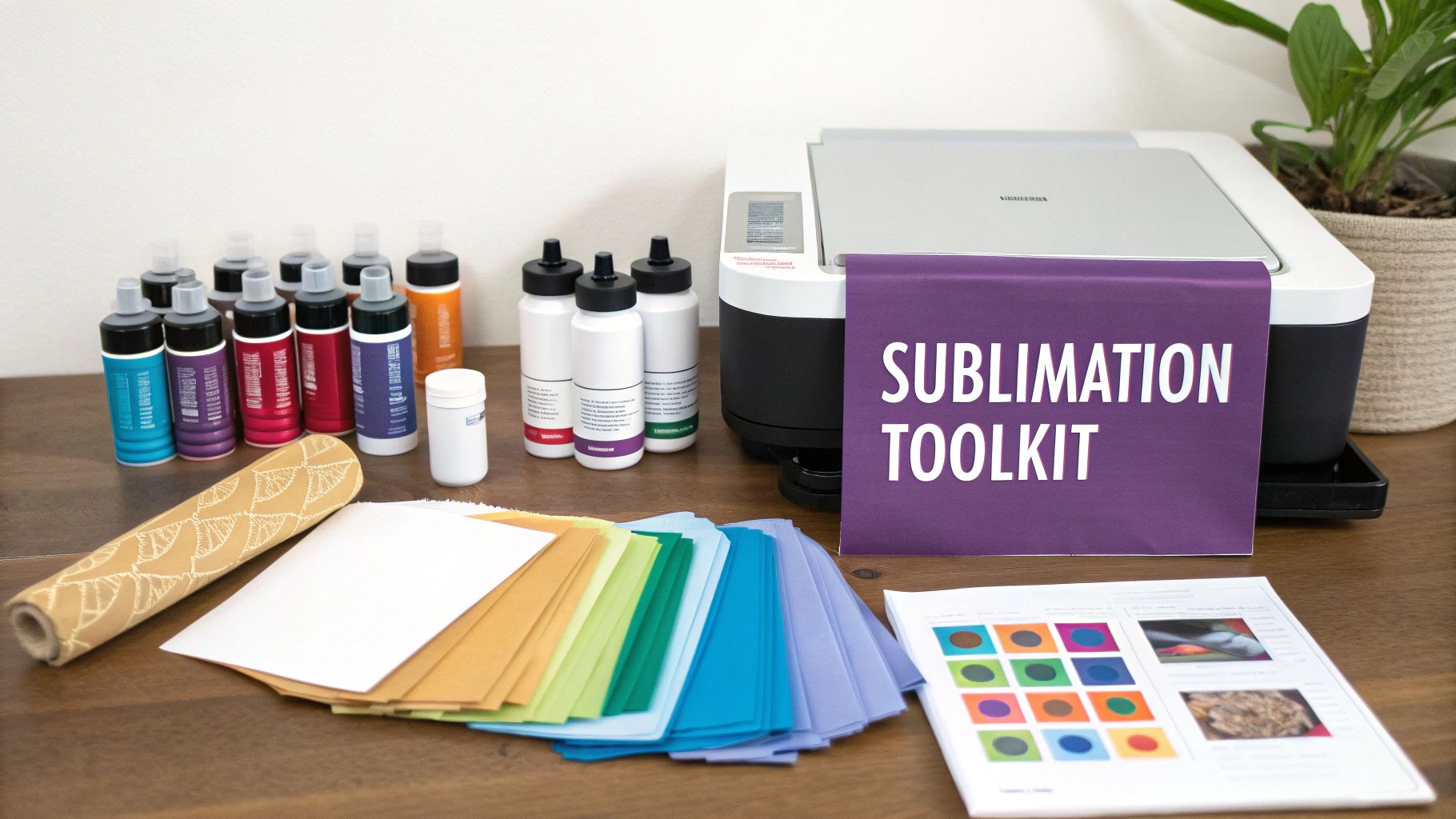
Think of it as four essential pillars. If any one of them is missing, the whole process just doesn’t work. Each piece of equipment has a highly specialized role in turning a digital image into a permanent part of the fabric.
The Printer And Specialized Inks
First up is the heart of the operation: the sublimation printer. This is not your everyday office machine. It’s purpose-built to handle special sublimation inks, which are the true stars of the show. These inks contain solid dye particles suspended in a liquid that, when printed, sit right on the surface of the transfer paper, just waiting for the heat press to work its magic.
Unlike standard ink that just stains a surface, these dyes are designed for that wild transformation from a solid directly into a gas. It’s this unique chemical trick that makes the whole sublimation process possible.
The Magic Of Transfer Paper
Next in the lineup is the sublimation transfer paper. This isn’t just any old paper, either. It has a special coating designed to do one job perfectly: hold the sublimation ink in a crisp, high-definition pattern and then release it completely when things get hot.
Think of it as a temporary launchpad for the ink. The coating stops the ink from soaking into the paper, making sure that nearly 100% of the dye turns into a gas during the heat press stage. This complete release is absolutely critical for achieving those deep, vibrant colors and sharp details that define a high-quality sublimated print.
A common mistake is using regular paper, which absorbs the ink and results in a faded, blurry transfer. Specialized transfer paper is non-negotiable for professional results.
This paper ensures every last detail of your vision makes it from the screen to the final product. Speaking of which, the material you’re printing on is just as important.
The All-Important Substrate
The “substrate” is just the industry term for the blank item you’re printing on—whether that’s a t-shirt, a mug, or a pair of high-performance socks. For real-deal sublimation printing, there’s one golden rule: the substrate must be made of polyester or have a special polymer coating.
Why so strict? The science behind sublimation depends on the unique properties of synthetic fibers. When heated, the pores of the polyester fibers literally open up, allowing the gasified dye to float right in. As the fabric cools, those pores close, permanently trapping the ink inside the fiber itself. This chemical bond is what makes the design impossible to fade, crack, or peel.
100% Polyester: This gives you the absolute best results—the most vibrant colors and the sharpest details.
Polyester Blends: For the process to work, a fabric needs at least 60% polyester. On lower-poly blends, the colors might look a bit more vintage or faded, which can be a cool effect if that’s what you’re going for.
Natural Fibers (like cotton): These just don’t work. The fibers don’t have the right chemical structure to bond with sublimation dyes, so the ink will simply wash right out.
This is why performance apparel and custom socks, which are often made from polyester blends, are such perfect candidates for this printing method. It’s also why our guide on designing your own socks is a great resource for getting your ideas ready for this specific process.
The Heat Press
Finally, we have the heat press. This machine is the catalyst that brings everything together, kind of like a high-tech oven that bakes the design permanently into the substrate. It applies two critical elements with extreme precision: intense heat and firm, even pressure.
The press heats up to temperatures between 350-400°F (175-205°C). This heat does two things at once: it activates the ink on the transfer paper, turning it into a gas, and it opens up the polyester fibers of the substrate. The pressure makes sure the transfer paper and the substrate are in perfect contact, allowing the gas to transfer cleanly across the entire design.
Together, these four components create a system that produces durable, stunningly detailed prints that become a seamless part of the item itself.
Printing Method Showdown Sublimation vs The Alternatives
Knowing what sublimation is gets you halfway there. The real magic happens when you see how it stacks up against the other players in the custom apparel game. Picking the right printing method is a huge deal—it can make or break your design—and each technique has a sweet spot where it truly excels.
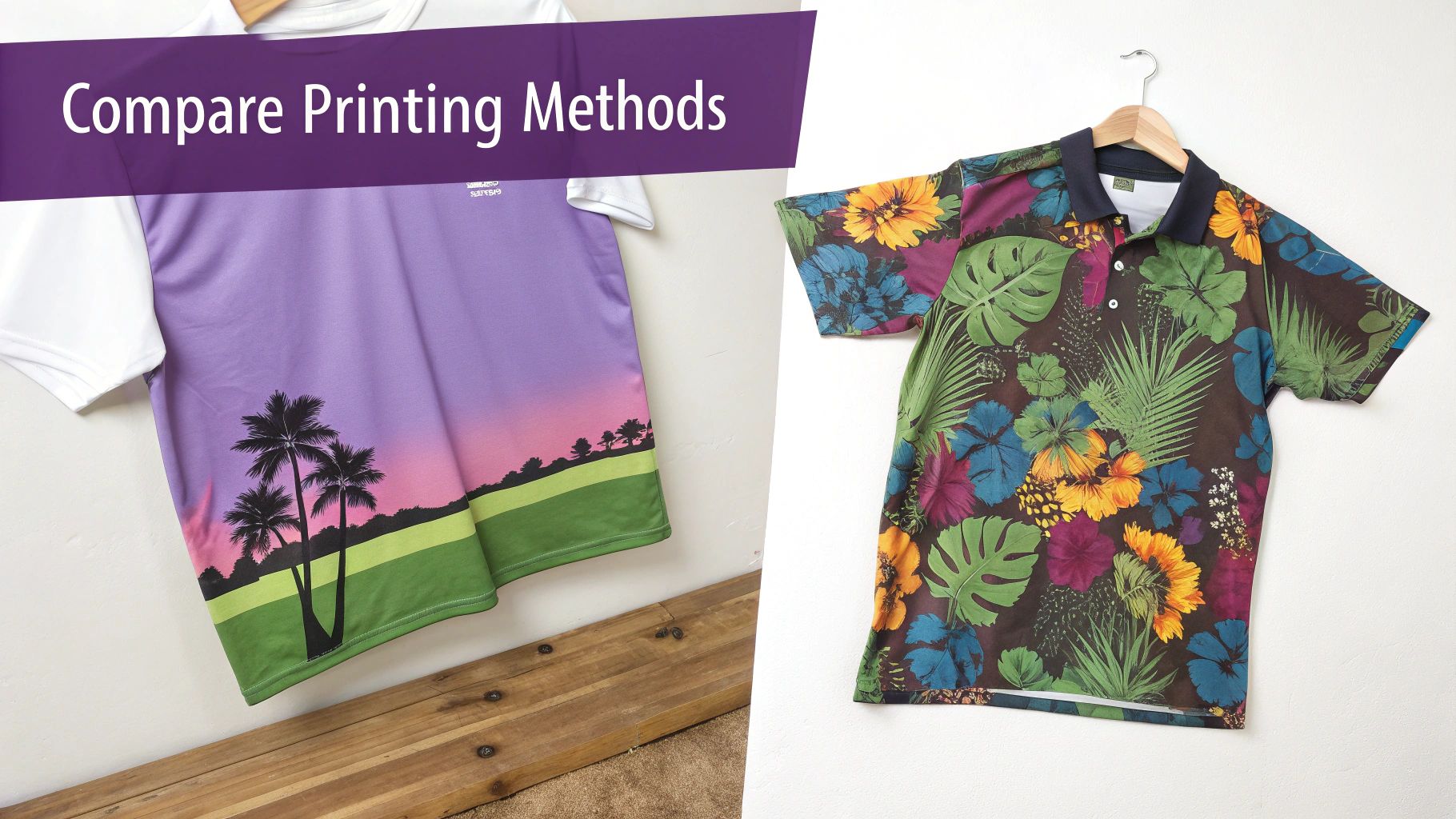
Let’s put sublimation head-to-head with the old standbys and modern contenders. We’ll focus on what really matters to you: how wild you can get with your design, how the final product actually feels, how long it will last, and what fabrics it works on. This is where you’ll see why sublimation is the undisputed champ for certain jobs, especially when you need jaw-dropping, full-color graphics on performance gear.
Sublimation vs. Screen Printing
Screen printing is the OG of custom t-shirts for a reason. It’s a workhorse method where ink is pushed through a stenciled screen onto the fabric. For simple, bold designs with just a few colors, especially on a huge batch of shirts, it’s a fantastic and cost-effective choice.
But throw a complex, photorealistic design at it, and the cracks start to show. Every single color needs its own screen, which means more setup, more cost, and more time. Sublimation, on the other hand, couldn’t care less. It prints millions of colors, smooth gradients, and microscopic details in one go, with no extra cost for complexity.
Feel: Screen-printed ink sits on top of the fabric. You can feel it. Sublimated ink becomes part of the fabric, leaving behind absolutely zero texture.
Durability: A good screen print holds up well, but it can eventually crack, peel, or fade with enough wear and washing. A sublimated design is permanent. It will last as long as the garment itself.
Bottom Line: Screen printing is perfect for a big order of one-color logos on cotton tees. Sublimation is the only way to go for putting a full-color team photo on polyester jerseys.
Sublimation vs. Direct-to-Garment (DTG)
Think of Direct-to-Garment (DTG) as a super-advanced inkjet printer for your clothes. It applies ink right onto the fabric, which allows for incredibly detailed, full-color images—much like sublimation. DTG’s superpower is that it works beautifully on cotton, which is sublimation’s biggest kryptonite.
The key difference is in the chemistry. DTG ink soaks into the cotton fibers but still sits as a very thin layer on top. Sublimation dye doesn’t just sit there; it triggers a chemical reaction, bonding permanently with polyester fibers. The result? Sublimated prints are typically more vibrant and way more durable, especially on performance wear that sees a lot of action and a lot of washing machine cycles.
Key Distinction: The trade-off is simple: fabric vs. permanence. DTG is your go-to for complex art on natural fibers like cotton. Sublimation delivers unmatched durability and eye-popping color on synthetics like polyester.
Sublimation vs. Heat Transfer Vinyl (HTV)
Heat Transfer Vinyl (HTV) is a totally different beast. You cut a design out of a sheet of colored vinyl and then use a heat press to stick it onto a shirt. It’s ideal for simple things like names and numbers on the back of a jersey or bold, single-color logos. Plus, it works on almost any fabric.
But HTV hits a wall with complexity. Forget about photos, gradients, or tiny, intricate details. The vinyl also creates a thick, sometimes rubbery layer that sits on top of the shirt. It’s not breathable and can feel pretty stiff. For anything athletic where you need the fabric to breathe, sublimation’s zero-feel finish is a million times better.
Sublimation vs. Woven/Knit-In
This one is super relevant when we’re talking about custom socks. A woven or knit-in design isn’t really “printed” at all. The logo or pattern is literally stitched into the sock as it’s being made. You can’t get more premium or durable than that.
The catch? Detail. The knitting process is basically like creating an image with pixels made of thread. It’s perfect for simple logos and patterns with a handful of colors, but it can’t handle photos, complex gradients, or fine text. Sublimation, with its limitless detail and color, is the only method that can put a picture of your dog on a pair of socks.
To make it even clearer, here’s how these methods stack up side-by-side.
Printing Method Showdown Sublimation vs The Alternatives
Feature
Sublimation Printing
Screen Printing
Direct-to-Garment (DTG)
Woven/Knit-In
Design Complexity
Unlimited colors, photos
Best for 1-4 solid colors
Unlimited colors, photos
Best for simple logos
Durability
Permanent, will not fade
Good, but can crack/peel
Good, but can fade slowly
Excellent, part of fabric
Feel
No feel, part of fabric
Noticeable ink layer
Soft, minimal feel
Textured, premium feel
Best Fabric
Polyester & poly-blends
Cotton, poly-blends
Primarily cotton
Any yarn (cotton, poly)
At the end of the day, each method has its place, but sublimation has carved out a powerful niche. When you need vivid, permanent, full-color designs on performance apparel, there’s simply no competition. For photo-realistic logos, all-over patterns, or any complex graphic on polyester items like custom socks or team jerseys, nothing else delivers that same one-two punch of visual impact and bombproof quality.
The Pros And Cons Of Sublimation Printing
No printing method is perfect for every single project, and anyone who tells you otherwise is probably trying to sell you something. Like any specialized technique, sublimation printing has its own unique set of strengths and weaknesses. Understanding both sides of the coin is the key to deciding if it’s the right choice for bringing your design to life.
This honest breakdown will help you manage expectations and see exactly where this powerful printing process shines—and where it takes a backseat to other methods.
The Advantages Of Sublimation
First, let’s talk about what makes sublimation a top-tier choice for so many custom apparel projects, especially high-performance gear. The benefits are significant, particularly when quality and visual impact are your main priorities.
Unmatched Durability: This is sublimation’s superpower. Because the ink becomes a permanent part of the fabric, the design will never crack, peel, or fade. Seriously. It’s as durable as the garment itself, which is why it’s the go-to method for athletic wear, custom socks, and anything else that will see a ton of action and frequent washing.
Unlimited Color And Detail: There are practically no limits to the complexity of a sublimated design. The process can reproduce millions of colors, subtle gradients, and photorealistic images with stunning clarity. This makes it the undisputed champion for intricate logos, detailed patterns, or vibrant, full-color artwork that needs to pop.
Completely Breathable Finish: Unlike screen printing or vinyl transfers that sit like a layer on top of the fabric, a sublimated design has zero “hand feel.” You literally can’t feel the ink at all. This means the fabric keeps its original softness and breathability—a must-have for performance apparel and comfortable socks where airflow is everything.
The Bottom Line: For vibrant, full-color designs on performance fabrics that need to last a lifetime, sublimation is in a class of its own. It delivers a premium, permanent finish that looks and feels like it was woven right into the material from day one.
The Limitations Of Sublimation
Now for the reality check. Sublimation has a few non-negotiable rules that define what it can and can’t do. Being aware of these limitations from the start will save you a lot of headaches and ensure your project is a success.
The biggest constraints are tied directly to the science of the process—these aren’t preferences, they’re hard requirements.
Material And Color Restrictions
The chemical reaction at the heart of sublimation only plays nice with specific materials and colors. This is just how the science works.
Polyester Is King: True sublimation only works on 100% polyester or high-content polyester blends. The gaseous ink needs those synthetic polymer fibers to bond with permanently. Try it on natural materials like cotton, and the dye will just wash right out in the laundry.
Light-Colored Fabrics Only: Sublimation inks are transparent. Think of them like a stain or a dye, not an opaque paint. They dye the fibers rather than covering them up. As a result, the process is only effective on white or very light-colored fabrics. Printing on a black shirt is like trying to draw on black paper with a highlighter—the design just won’t show up.
Potential For White Creases: When you’re printing on a pre-made garment like a t-shirt or a pair of socks, tiny, unavoidable folds in the fabric (especially around seams or under the arms) can block the ink from reaching those spots. This can sometimes result in small, random white streaks or creases where the original fabric color shows through. It’s a natural part of the process for finished goods.
Knowing these pros and cons upfront ensures you’re choosing the absolute best method for your specific design and product, guaranteeing a final result you’ll be proud of.
How To Care For Your Sublimated Apparel
One of the best things about sublimation is its incredible durability. Since the ink becomes part of the actual fabric fibers, you don’t have to worry about the design cracking, peeling, or fading away like you would with screen printing.
That said, a little TLC will go a long way in keeping your custom apparel looking as sharp and vibrant as the day it arrived. Following a few simple rules protects both the fabric and the permanent design baked into it, ensuring your gear lasts for years.
Washing And Drying Best Practices
Proper cleaning is the single most important part of maintaining your sublimated apparel. Getting this right preserves the color and fabric quality, preventing any unnecessary wear and tear.
Here’s the simple routine to follow:
Turn It Inside Out: Before you toss it in the wash, turn the garment inside out. This simple step protects the printed side from getting snagged or roughed up by zippers, buttons, or other clothes.
Use Cold Water: Always wash your sublimated items in cold or cool water. Super high heat can, in very rare cases, reactivate the sublimation dyes, which is the last thing you want.
Choose a Mild Detergent: Stick to gentle, mild detergents. Steer clear of harsh chemicals and especially chlorine bleach, as they can break down polyester fibers and dull your design’s vibrancy over time.
Once the wash cycle is done, how you dry your gear is just as crucial. For the absolute best, longest-lasting results, hang drying is your top choice. It’s the gentlest method and completely eliminates any risk from heat.
If you’re in a pinch and need to use a machine, be sure to tumble dry on the lowest possible heat setting. Remember, excessive heat is the main enemy of a finished sublimated print, so keeping things cool is the golden rule.
Pro Tip: Skip the fabric softeners. While they promise softness, they can leave a residue on polyester that messes with its moisture-wicking properties and can even make the print look a little dull.
By following these easy instructions, you’re guaranteeing your custom gear stays a vibrant, long-lasting part of your team or brand identity. For even more detailed advice, check out our complete guide to caring for your custom socks.
Common Questions We Get About Sublimation
Even after getting the rundown on sublimation, it’s totally normal to have a few more questions pop up. Here are the most common things we hear from customers, with straight-up answers to help you decide if sublimation is the right move for your project.
Will The Design On My Sublimated Socks Fade Or Peel Off?
Nope, never. This is probably the biggest win for sublimation. Because the ink becomes part of the fabric itself—instead of just sitting on top like a layer of paint—the design is in it for the long haul.
That means your design will not crack, peel, or fade, no matter how many times you wash it. This makes it the go-to choice for athletic socks that are going to see a lot of wear, tear, and spin cycles.
Can You Use Sublimation Printing On Cotton Socks?
Unfortunately, no. Sublimation only works its magic on polyester or polymer-coated materials. The science behind it is pretty specific: the dye needs synthetic fibers to create a permanent chemical bond. Natural fibers like cotton just can’t grab onto the dye.
That’s why we stick to high-quality, performance-ready polyester-blend socks for our sublimation printing. If you’re set on a cotton-heavy sock, our premium woven options are a fantastic alternative that still looks incredible.
The Bottom Line: The polyester rule isn’t just a preference; it’s a non-negotiable part of the science. The dye’s chemical reaction is designed for the molecular structure of synthetic fibers, which is exactly what gives it that permanent, vibrant finish.
Is Sublimation A Good Choice For Complex Logos?
It’s not just a good choice—it’s the best choice for intricate, colorful, and photo-realistic designs. Other methods, like screen printing, need a separate screen for every single color, which quickly gets complicated and expensive. Sublimation, on the other hand, can reproduce millions of colors, smooth gradients, and tiny details with stunning clarity, all in one go.
If your logo has fine print, specific brand color gradients, or is literally a full-color photograph, sublimation will nail it without compromise. It’s built for the kind of designs that other methods just can’t pull off.
What Is The Difference Between Sublimated And Woven Socks?
Great question! They’re two completely different approaches, and each one delivers a unique, premium feel. It really comes down to what you’re looking for.
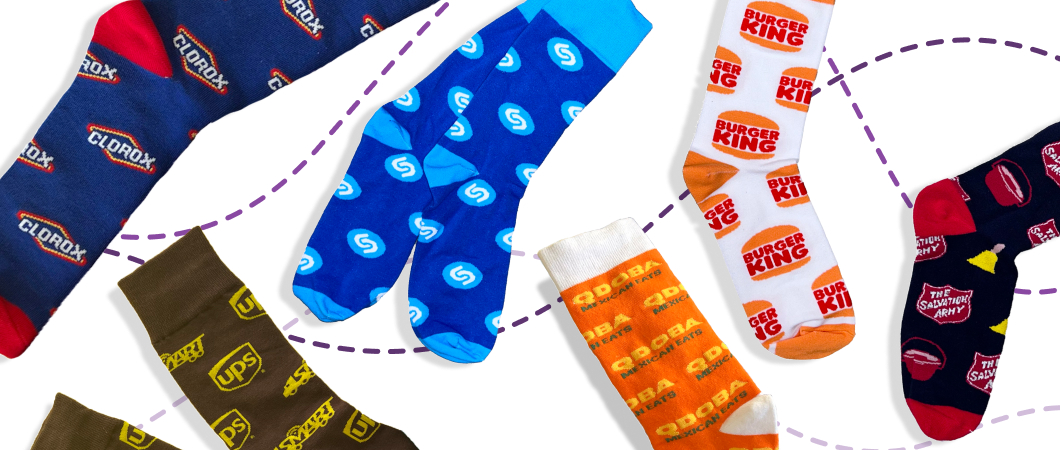
Sublimated Socks: Think of this as “printing” a design onto the surface of a pre-made sock using heat. This method allows for unlimited colors and photo-quality detail, which is perfect when you need to print complex graphics, faces, or highly detailed images.
Woven Socks: Here, the design is “knit-in,” meaning it’s stitched directly into the fabric as the sock is being made. This creates a premium, textured feel but works best for simpler logos and patterns with a limited color palette.
Not sure which way to go? We’re happy to chat and help you figure out which style is the perfect match for your vision and design goals.
Ready to see your vibrant, complex design come to life on a pair of high-quality custom socks? The team at Custom Sock Shop is here to make it happen with an easy design process and fast turnarounds.