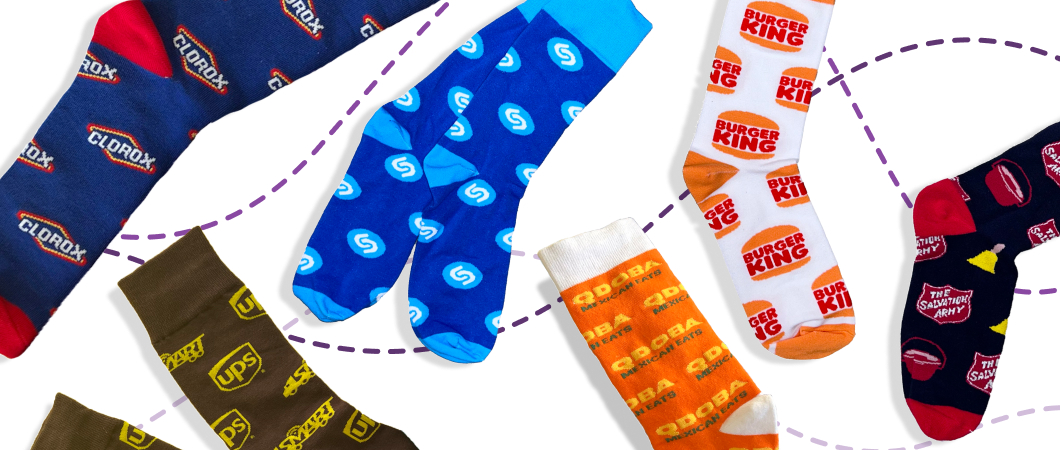
The right socks for soccer are all about performance. Think moisture-wicking synthetic fabrics, targeted compression to keep everything feeling supported, and a cushioned footbed that can take a beating. Unlike your standard cotton socks, these are specifically engineered to stop blisters in their tracks and keep players comfortable and focused for the full 90 minutes.
Why Your Team’s Socks for Soccer Matter
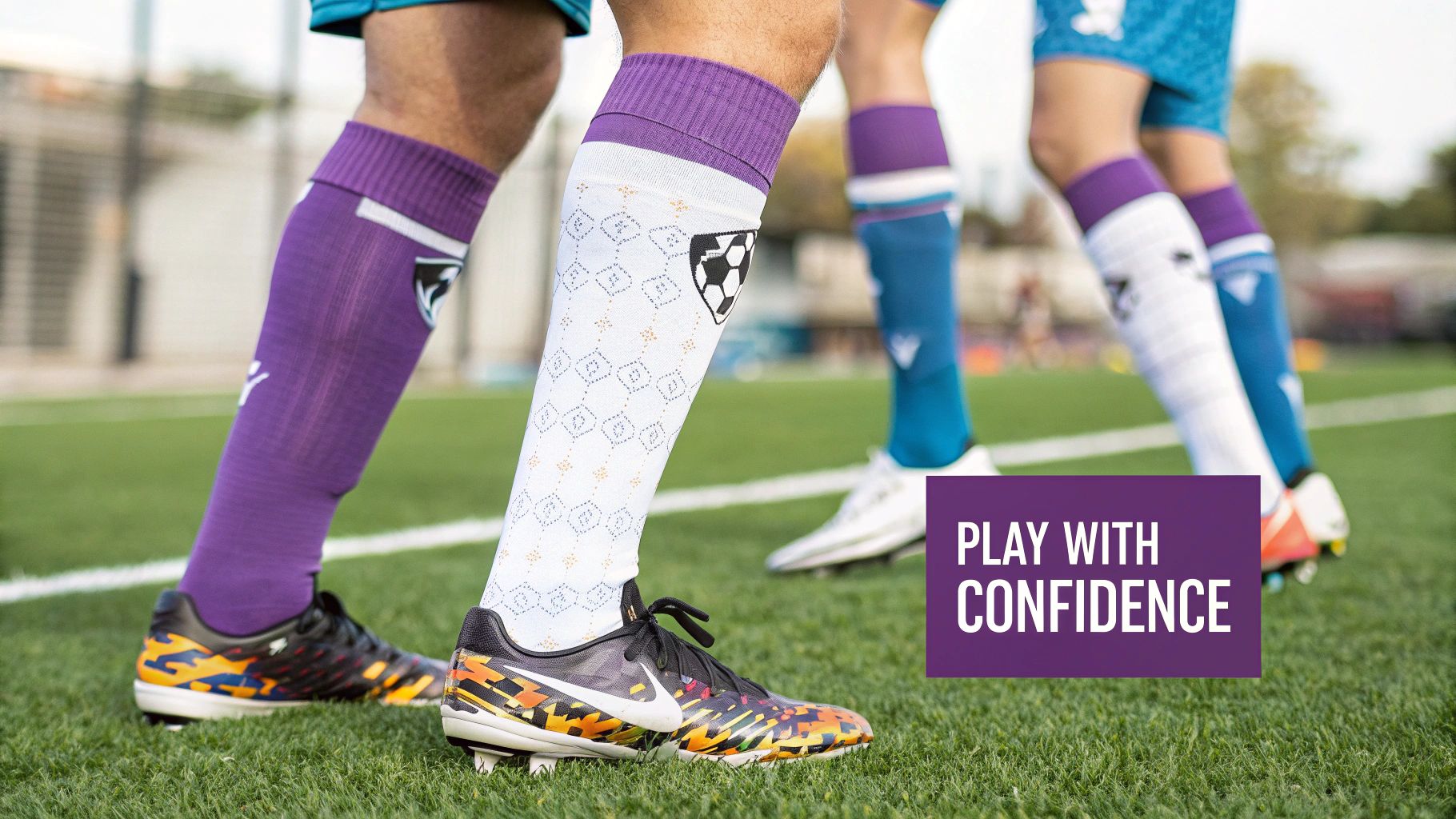
Let’s be honest. When you’re putting together a team’s kit, socks are usually the last thing on the list. For many coaches and managers, they’re just a box to check—something to hold shin guards in place and make the uniform look complete. But seeing them as just an accessory is a huge missed opportunity for a real competitive edge.
The truth is, the right pair of soccer socks can make or break a player’s game. They’re a critical piece of equipment that directly impacts comfort, safety, and even team morale. A cheap, poorly made sock leads to distracting blisters, heavy and sweaty feet, and a total lack of support during those quick cuts and sprints that define the sport.
More Than Just a Piece of Fabric
Treating high-quality, performance-oriented soccer socks as a strategic investment is one of the smartest moves a team can make. This isn’t about looks; it’s about giving your players gear that actively helps them on the field.
To get a better sense of what you’re investing in, let’s compare a standard pair of athletic socks with a pair designed specifically for soccer.
Standard vs Performance Soccer Socks
| Feature |
Standard Athletic Sock |
Performance Soccer Sock |
| Material |
Usually cotton or a simple blend. |
Moisture-wicking synthetics (nylon, polyester, spandex). |
| Support |
Minimal to none. |
Targeted arch and ankle compression for stability. |
| Comfort |
Basic cushioning, can get heavy with sweat. |
Strategic footbed cushioning absorbs impact. |
| Blister Risk |
High, as cotton holds moisture against the skin. |
Low, thanks to sweat-wicking properties that reduce friction. |
| Durability |
Wears out quickly with intense athletic use. |
Built to withstand the demands of a full season. |
As you can see, performance socks are in a different league entirely. They’re built with a purpose.
Properly engineered socks offer tangible benefits your players will feel immediately:
- Blister Prevention: Wicking away sweat is the number one way to reduce the friction that causes painful blisters.
- Crucial Support: Built-in compression zones around the arch and ankle add stability for explosive movements and help fight off muscle fatigue.
- Better Comfort: A cushioned footbed absorbs the constant impact from running and jumping, which saves a lot of wear and tear on players’ joints.
This isn’t just a niche market. The global athletic socks industry, which is full of soccer-specific designs, is booming. It shot up to USD 7.7 billion by 2025 and is expected to hit USD 13.6 billion by 2035. That kind of growth tells you that athletes at every level are realizing performance gear is non-negotiable.
Building a United Front
Beyond all the technical specs, custom socks forge a powerful sense of unity and identity. When your team steps onto the field looking sharp and professional from head to toe, it’s a massive confidence booster. That visual cohesion reinforces the feeling that they are one single, determined unit.
For any team serious about stepping up its game, learning how to prepare with custom team socks is a great first step. With low minimums and expert design help available, upgrading your team’s socks is an easy and high-impact move for any school league or competitive club.
Selecting Performance Features for Your Players
Sure, socks are part of the uniform, but their real job starts once the whistle blows. The technical features are what truly impact on-field performance, supporting your players through every sprint, slide, and tackle. It’s less about looks and more about engineering the right gear from the ground up.
And that foundation is always the material.
If you take away one thing, let it be this: cotton is the enemy of athletic performance. It’s a sponge. It soaks up sweat and holds it right against the skin, leading to heavy, waterlogged feet and a one-way ticket to blister city.
Instead, you need to be looking for synthetic blends that feature materials like nylon, polyester, and spandex. These fabrics are built for moisture-wicking, actively pulling sweat away from the foot to keep players dry, comfortable, and focused. For any serious team, this is non-negotiable.
Material Matters Most
The specific blend of fabrics directly controls a sock’s durability, stretch, and ability to handle sweat. A well-made pair of socks for soccer will feel light and breathable, even in the final, grueling minutes of a tied match.
Here’s what you’re looking for in the blend:
- Nylon: This is your workhorse. It provides exceptional durability and stands up to the constant abrasion of in-game action.
- Polyester: This material is naturally hydrophobic—it repels water and is an absolute champ at wicking sweat away from the skin.
- Spandex (or Lycra): This delivers the critical elasticity needed for a snug, supportive fit that won’t slip or bunch up inside a cleat.
Don’t underestimate the science behind keeping feet dry. An effective moisture-wicking fabric can be the difference between a player feeling fresh and a player being sidelined by painful blisters caused by friction on damp skin.
If you want to get into the nitty-gritty, you can learn more about how moisture-wicking fabric works and see exactly why it’s such a game-changer for athletic gear.
Beyond the Fabric: Support and Cushioning
Once you’ve nailed down the right material blend, it’s time to look at the structural elements that provide stability and comfort. These are the unsung heroes that help reduce fatigue and protect players from the sheer physical demands of the game.
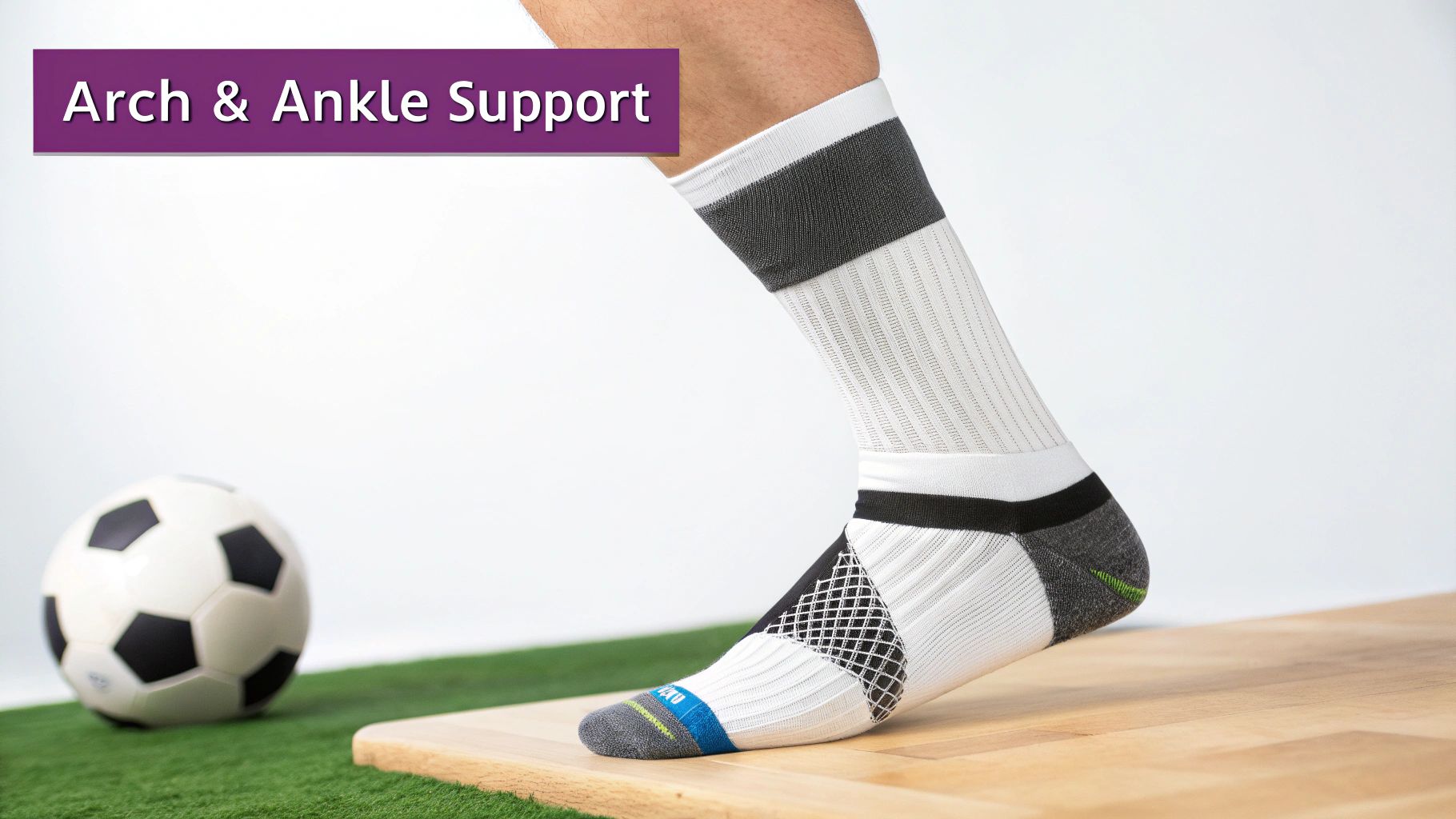
Targeted Compression is a must-have in modern athletic socks. Forget the old-school, uniform tube sock. Performance socks have specific zones of tighter-knit fabric designed to support key areas of the foot and leg.
- Arch Support: Look for a compression band around the midfoot. This helps keep the arch from tiring out, which is absolutely critical for maintaining balance and generating power.
- Ankle Stability: A little extra compression around the ankle provides a real sense of security and support during those quick, explosive directional changes.
Strategic Cushioning adds another layer of protection without making the sock feel bulky. You want to see light padding in high-impact zones like the heel and the ball of the foot. This cushioning absorbs the shock from constant running and jumping, reducing the strain on a player’s feet and joints over a full 90-minute match.
Think about matching these features to positional needs. A defender who’s constantly in physical challenges might benefit from extra padding around the ankle. On the other hand, a midfielder covering miles of ground might prioritize a sock with a lighter feel and more mesh venting for maximum breathability. It’s these small details that can give your players a meaningful advantage.
Designing Custom Socks Your Team Will Love
Alright, this is where the fun really begins. Once you’ve nailed down the performance specs, it’s time to bring your team’s identity to life. Moving from materials and compression to visual design is easily the most exciting part of the process. You get to create something that not only looks sharp on the field but builds a real sense of unity.
Let’s keep it simple. There are two main ways to get your design onto a sock. Imagine your team’s classic crest knitted right into the fabric for a durable, premium feel—that’s a woven design. Now, picture a complex sponsor logo with vibrant, photorealistic color gradients—that’s a job for a printed (or dye-sublimated) sock. The right choice really just depends on your artwork and the look you’re going for.
Woven vs Printed Customization
Getting a handle on the key differences between these two methods is the first step toward creating a design that you and your team will be proud to wear.
Here’s a quick head-to-head comparison to help you figure out which path is right for your design.
| Feature |
Woven (Knitted) Design |
Printed (Dye-Sublimated) Design |
| Best For |
Logos with 1-6 solid colors, text, and simple patterns. |
Complex, multi-color logos, gradients, and photo-realistic images. |
| Look & Feel |
Premium, textured, and integrated directly into the sock fabric. |
Smooth, vibrant, and allows for unlimited color possibilities. |
| Durability |
Extremely high, as the design is part of the sock’s structure. |
Very high, as the ink is infused into the fibers and won’t crack or peel. |
| Detail Level |
Best for bold shapes; fine details can get lost in the knit. |
Captures intricate details with pixel-perfect clarity. |
So, what does this mean in the real world? A traditional club crest with two solid colors is a perfect candidate for a woven design. It’ll look classic and hold up forever. But if you’ve got a modern logo with a sunset gradient, you’ll absolutely need printing to capture its full effect.
Getting the Details Just Right
Once you’ve settled on a method, it’s time to dial in the finer points. This is where you make sure the final product is a perfect match for what you’re picturing in your head.
One of the most critical steps? Color accuracy. Just saying “we want blue” is a recipe for disappointment, because there are hundreds of shades of blue. To avoid any surprises, the best practice is to provide Pantone (PMS) color codes. This is a universal matching system that guarantees the navy blue on your jersey is the exact same navy blue on your socks.
Next up is logo placement. Think about where your logo will have the most impact during a match.
- Side of the Calf: This is the most popular spot for a reason. It offers a large, visible canvas when players are running down the field.
- Front of the Shin: A great secondary location, clearly visible when a player is facing forward or taking a knee.
- Back of the Calf: This area works well for smaller details like player numbers or secondary logos.
The global socks market, valued at USD 47.08 billion in 2023, is projected to climb to USD 73.69 billion by 2030. A huge driver of this growth is the athletic sector, where performance and customization have become key differentiators. As more teams invest in their gear, getting the design details right is more important than ever. You can dig into the numbers yourself in the full research from Grand View Research.
Bringing all these ideas together might feel like a big lift, but professional designers are here to make it easy. They can take your logo, color codes, and placement ideas and create a digital mockup. This proof shows you exactly what your socks will look like before a single pair gets made, giving you total confidence to sign off on the final design.
For more tips and inspiration, check out our complete guide on designing your own custom socks and start creating a look your team will be fired up to wear.
Navigating the Team Ordering Process
Placing a bulk order for your team’s custom soccer socks can feel like a massive undertaking, but I promise it doesn’t have to be. With the right approach, it’s a straightforward process that lets you focus on the upcoming season, not logistical nightmares.
The first hurdle is always the same: collecting everyone’s sizes. Trust me, chasing down individual players via text or email is a recipe for chaos. A much better way is to set up a simple online survey or sign-up sheet. Just ask for each player’s shoe size and include a standard shoe-to-sock size chart for reference. This takes out all the guesswork and gives you a clean, organized list to work from.
Understanding Minimums and Production Timelines
One of the biggest questions I get from team managers is about order quantity. The good news? You don’t need to order hundreds of pairs to get started. Many suppliers offer low minimums, often as low as a dozen pairs per design. This gives you incredible flexibility, letting you get the exact size mix your roster needs without getting stuck with a pile of extra smalls you’ll never use.
Once you’ve submitted your design and size breakdown, the production clock officially starts ticking. The first—and most critical—milestone is approving your digital proof. This is essentially a mockup that shows you exactly how your final sock will look. You should expect to receive this in your inbox within a couple of business days.
This is where you’ll make the key decisions before your order goes into production.
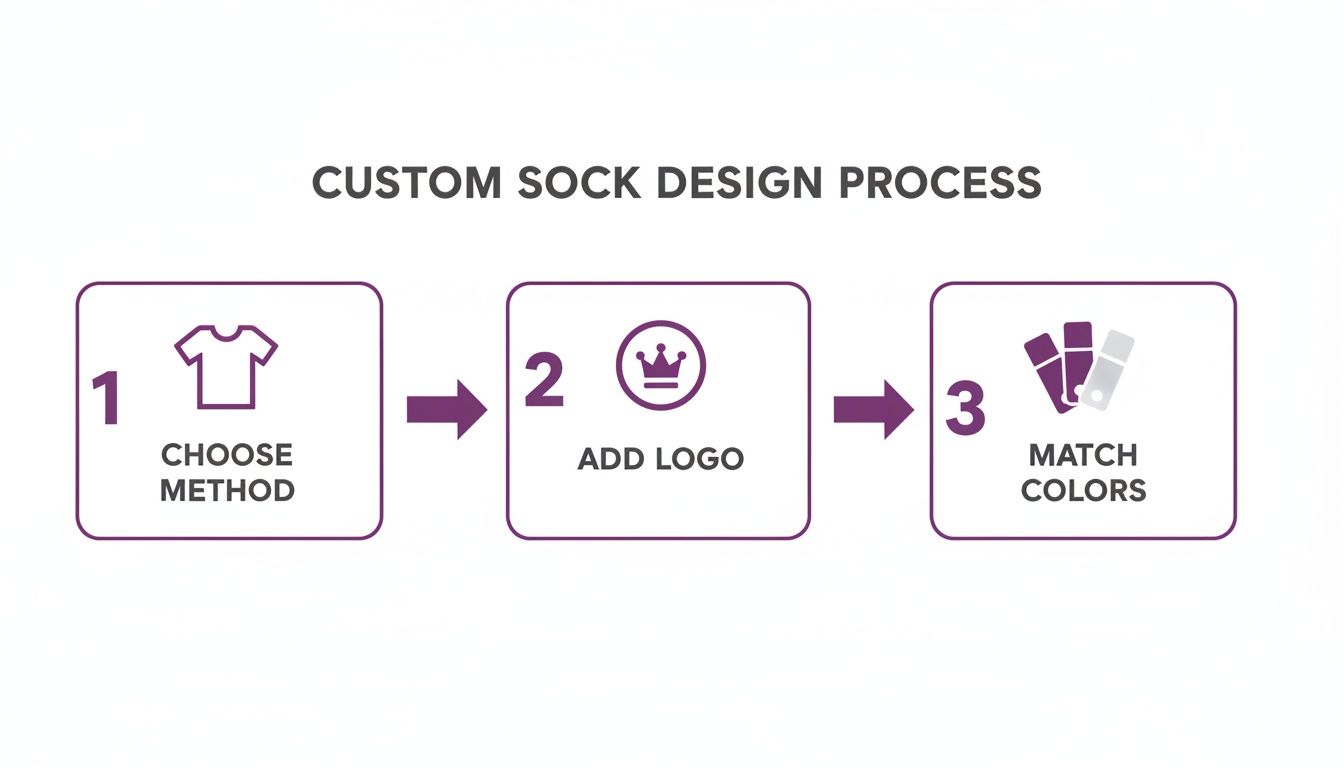
As you can see, you’ll pick your customization method, finalize the logo, and lock in the colors before anything gets made.
Pro Tip: Look over your digital proof with a fine-tooth comb. Seriously. Double-check everything—colors, logo placement, spelling, you name it. Your approval is the green light for production, so catching an error here is the difference between a perfect order and a major headache.
After you give the final thumbs-up, your order moves into the production queue. A standard turnaround time is usually just a few weeks, which is a world away from the long waits you can expect from overseas suppliers.
But let’s be real, seasons can be unpredictable. Sometimes you need gear fast for an unexpected tournament or last-minute event. If you find yourself in a pinch, don’t hesitate to ask about rush order options. Many suppliers can speed things up to make sure your team hits the field fully equipped. Clear communication is everything here—it’s the key to a smooth process and a timely delivery.
How to Care for Your Team’s Custom Socks
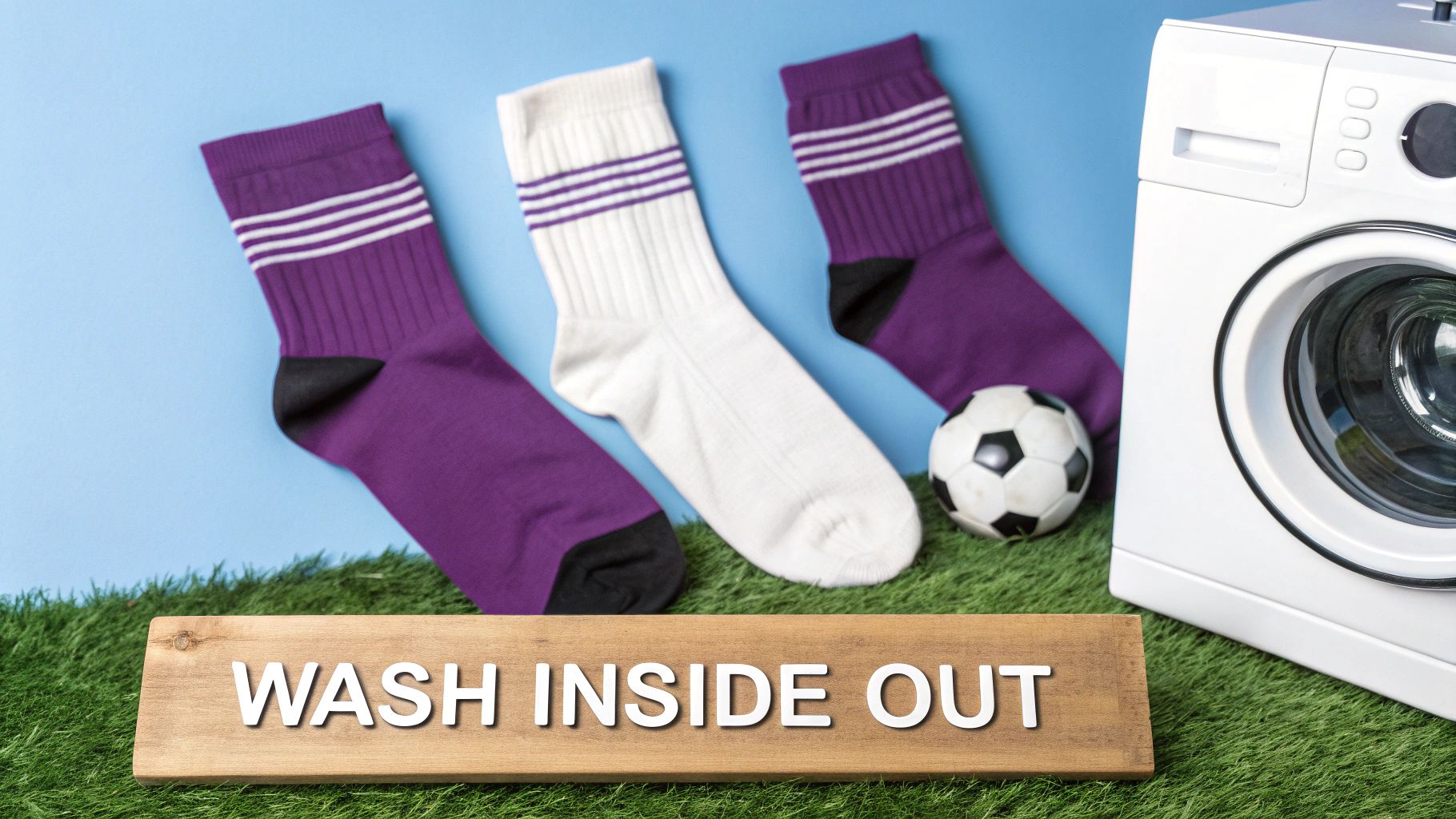
You’ve invested the time and money to get the perfect custom socks for soccer. Now, let’s make sure that investment holds up all season long. Proper care is about more than just getting them clean—it’s about protecting the performance features and the vibrant design you worked so hard on.
A little extra attention on laundry day can make a massive difference in how your team’s socks look and feel, game after game.
The first rule is the simplest, but it’s also the most important: turn every pair inside out before they hit the wash. This one small action shields the exterior of the sock, where your custom logo and team colors are most exposed. It prevents the friction that causes pilling and fading, keeping your design from looking tired before its time.
The Right Way to Wash and Dry
With your socks prepped, the next step is dialing in your washer settings. Always, and I mean always, use a cold water cycle. Hot water is the enemy of elasticity; it causes the performance fibers to break down, which means your players lose that snug, supportive fit they count on.
Here’s the laundry day playbook:
- Go with a Mild Detergent: Harsh chemicals and bleach are a no-go. They can wreck both the fabric and your custom artwork. Stick to something gentle.
- Skip the Fabric Softener: This one is a big deal. Fabric softeners leave behind a waxy film that clogs up the pores of moisture-wicking fabrics, completely killing their ability to keep feet dry.
- Avoid High-Heat Drying: The intense heat from a standard dryer will shrink your socks, weaken the spandex, and compromise the compression zones that provide that critical support on the field.
The absolute best way to dry your team’s socks is to just air-dry them. Hang them up or lay them flat. You’ll be surprised how quickly they dry, and they’ll keep their original shape, color, and performance for far longer.
Think of it this way: you wouldn’t just toss a game plan in the mud. Taking these small steps ensures your team’s socks stay bright, the fit stays locked in, and the performance features keep working from the first match to the final whistle.
For a deeper dive, our complete guide to caring for your custom socks has even more pro tips to keep your gear in top form.
Got Questions About Custom Soccer Socks? We’ve Got Answers.
When you’re outfitting a whole team, questions are going to come up. It’s just part of the process. From materials and sizing to design and delivery times, coaches and team managers usually have the same key concerns. We’ve heard them all, so we gathered the most common ones right here to give you clear, straightforward answers.
Think of this as your quick-start guide to ordering with confidence.
How Do I Keep My Players from Getting Blisters?
Nothing sidelines a player faster than a nasty blister. The best defense is all in the material. You absolutely want to look for socks made from a synthetic blend—think nylon, polyester, and spandex. These materials are engineered to pull sweat away from the skin, which is the number one thing you can do to prevent the friction that causes blisters.
Steer clear of cotton. It’s the opposite of what you need; it acts like a sponge, soaking up moisture and holding it right against the foot. That damp environment is a blister’s best friend. For an extra layer of protection, look for socks with a seamless toe and some light cushioning in high-impact zones like the heel and ball of the foot. It’s these small details that make a huge difference during a long game or a grueling tournament weekend.
What’s the Easiest Way to Handle Sizing for the Whole Team?
Figuring out sizes for an entire roster doesn’t have to be a nightmare. The simplest, most effective way is to use a standard shoe size chart. Our socks are sold in ranges—for example, a Large will typically fit Men’s shoe sizes 9-12.
To get this info without a million emails, just send out a quick poll or a digital sign-up sheet asking for each player’s shoe size. Easy.
Our minimum order is often just a dozen pairs. This gives you the flexibility to order a mix of different sizes without committing to a huge quantity of one size. Every single player gets a perfect fit.
This approach takes all the guesswork out of it and keeps the process moving.
Woven vs. Printed Designs: Which One Is Better?
This is a big one, and knowing the difference is key to getting the look you want.
A woven design is a lot like embroidery. Your logo and text are knitted directly into the sock’s fabric. This creates a really premium, textured look that holds up incredibly well over time. It’s the perfect choice for traditional team crests, player numbers, or simple text using one to six solid colors.
On the other hand, a printed design (you might hear it called dye-sublimation) infuses ink right into the sock fibers. This process is amazing because it allows for unlimited colors, complex gradients, and even photo-quality images. If your team has a detailed sponsor logo or a modern graphic with tons of color, printing is the only way to go. Our in-house design team can always give you a recommendation on which method will make your specific artwork pop.
How Long Until My Custom Order Arrives?
Working with a US-based manufacturer makes a huge difference here. Once you give the final “okay” on your digital design proof (which usually gets to you in a couple of business days), standard production time is typically just a few weeks. That’s way faster than waiting on long shipping delays from overseas suppliers.
We know how quickly tournament deadlines and season openers can sneak up on you. If you’re in a time crunch, just ask about our rush order options. We will always do everything we can to get your team geared up and ready to hit the field on time.
Ready to create high-performance, custom socks for soccer that your team will actually love to wear? At Custom Sock Shop, our in-house designers are ready to bring your vision to life with fast turnarounds and low minimums. Start your design today.