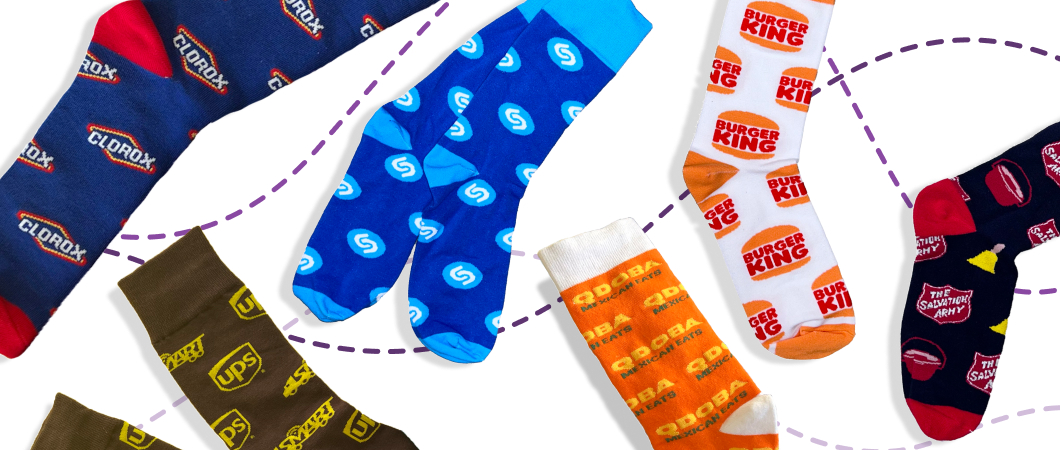
Athletic Socks
Print Socks
- Low Minimums
- Lowest Industry Pricing
- Free Shipping $250+
- USA Sock Designers

Before you even think about designing a t-shirt or how to start a clothing brand, the whole game is won or lost in one foundational step: defining your niche. This isn’t just business jargon. It’s about carving out a specific corner of the market where you can connect with an audience that bigger brands are ignoring.
Get this right, and you’re not just another brand fighting for scraps. You’re building a loyal community from day one.
Let’s be real: the fashion world is saturated. Trying to be everything to everyone is a surefire way to become nothing to anyone. Instead of launching a generic “streetwear” or “athleisure” brand, your first job is to get hyper-specific.
Think of it like this: “women’s activewear” is a vast, competitive ocean. But “sustainable, high-performance yoga wear for new mothers”? That’s a specific, defensible island. You’re no longer just selling leggings; you’re solving a problem for a distinct community. This initial focus is your strategic advantage.
So, how do you find that island? Start by looking for the gaps. Who is being ignored or poorly served by the brands already out there? Your ideal customer isn’t just a demographic; they’re a person with passions, problems, and a point of view.
Here are a few ways to get the ideas flowing:
Once you have a few ideas, you have to validate them. Go hang out where these people are online—Reddit subs, Facebook groups, niche forums. What are they constantly complaining about when it comes to clothes? What do they wish they could find? This kind of direct insight is pure gold.
Your niche is the blueprint for your brand identity. And no, I don’t just mean a cool logo. I’m talking about the entire personality of your business—the name, the story, and the visual vibe that connects with your target customer on an emotional level. You can learn more about how to create a lasting impression with our detailed guide on effective branding strategies.
Your brand story is your single most powerful marketing tool. It’s not about what you sell, but why you sell it. People don’t just buy clothes; they buy into the story and the community you’re building.
A brand targeting eco-conscious hikers will have a completely different look and feel than one for urban skaters. The hiker brand might use earthy tones, natural imagery, and a story about conservation. The skater brand? Think bold graphics, gritty photography, and a tone that speaks to rebellion and creativity.
Okay, last step before the fun stuff. You need to translate your niche and brand identity into a simple, scannable business plan. Don’t freak out—you don’t need a 50-page document. You just need to get your core objectives and financial realities down on paper.
A lean plan for a startup clothing brand should cover these four bases:
Getting this foundation right is non-negotiable. It dictates every single decision you’ll make from here on out, from product design to marketing, and sets you on a path to build a brand with purpose and profit.
This is where the magic happens. All those sketchbook doodles, late-night ideas, and abstract concepts start turning into something you can actually hold. It can feel like a huge leap, especially if you don’t have a formal fashion background, but don’t get intimidated. This part of the process is less about being a master illustrator and more about crystal-clear communication.
Your mission is to create a perfect blueprint for your product—a set of instructions so clear that any manufacturer on the planet can look at it and know exactly what to do. This blueprint, the tech pack, is what separates the pros from the hobbyists. It’s your best shot at getting your samples made right the first time.
Forget fancy, artistic sketches. In the manufacturing world, precision beats artistry every time. The industry standard is a simple flat sketch, which is just a two-dimensional drawing of your garment as if it were laid flat. This sketch needs to clearly show every seam, stitch, and piece of hardware.
The real heart of this stage, though, is the tech pack. Think of it as the complete instruction manual for your product. It’s a detailed document that leaves zero room for error or interpretation by the factory. A solid tech pack is the best insurance you can buy against costly mistakes and endless rounds of samples.
A comprehensive tech pack absolutely must include:
A detailed tech pack minimizes factory guesswork. The less a manufacturer has to assume, the closer your first sample will be to your original vision, saving you significant time and money on revisions.
As you’re building your tech pack, you also need to be sourcing your raw materials. The fabric you choose is fundamental to your brand’s identity. It dictates the garment’s feel, quality, price, and even its sustainability story. Don’t just pick something because it looks good—think about its drape, durability, and how it needs to be cared for.
Start by ordering swatches from different suppliers. Many fabric wholesalers have low minimums, which is perfect for new brands just getting started. Once you find a fabric you love, order a few yards to use for your first samples. This lets you see how it actually behaves when cut and sewn, and more importantly, how it feels to wear.
Make sure to document every single supplier and fabric code in your Bill of Materials. If you find yourself stuck turning your vision into a concrete design, working with a professional can be a total game-changer. You can learn more about how to collaborate with a designer to bring your ideas to life.
Alright, your tech pack is done and your materials are in hand. It’s time to make your first prototype. This is, without a doubt, the most crucial step before you even think about a full production run.
Let’s be real: your first sample will almost never be perfect. That’s completely normal. The whole point is to get a physical product in your hands so you can test, tweak, and refine it.
When that first sample arrives, it’s time for a fit session. Get it on a fit model (or yourself, if you’re the target size) and meticulously check it against your tech pack’s spec sheet.
Take detailed notes and clear photos of everything that’s off:
Package up all your feedback—with photos and updated measurements—into a single, clear document for your factory. This back-and-forth process of sampling, fitting, and refining might take two or three rounds, but it’s absolutely non-negotiable.
Approving a sample for production is your final sign-off. You need to be 100% satisfied before giving that green light. This diligence is what builds a reputation for quality from day one.
You’ve got a finalized tech pack and an approved sample in your hands. This is a huge milestone. Now, you’re officially ready to think about production.
This next phase is all about finding the right partner to bring your vision to life at scale. Choosing a manufacturer is one of the most critical relationships you’ll build—it directly impacts your product quality, your costs, and your brand’s ability to grow.
This isn’t just about finding the lowest price. It’s about finding a partner who gets your brand’s values, meets your quality standards, and—most importantly—can work with your starting volume. For any new brand, reliability and flexibility are way more important than chasing the absolute thinnest margins.
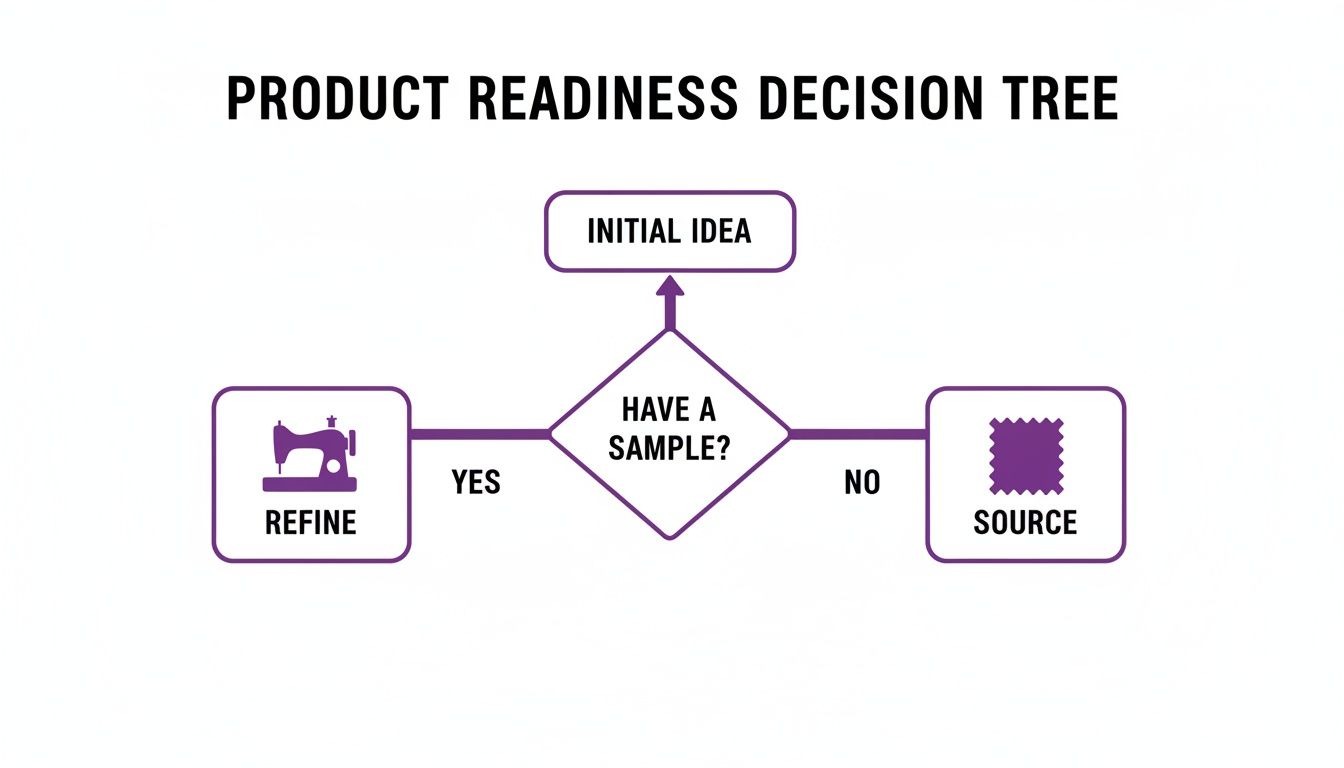
As you can see, whether you’re starting with a physical sample or just a solid concept, the path forward always involves refining the details and then sourcing the right materials and manufacturing partners.
One of the first big forks in the road is deciding where to produce your clothing. The choice between domestic (Made in the USA, for example) and overseas manufacturing has massive implications for your budget, timeline, and even your brand story. There’s no single right answer here; it’s about what makes sense for your specific business.
Overseas Manufacturing (e.g., in Asia or South America):
Domestic Manufacturing (Made in the USA):
For most startups, the agility and reduced financial risk of domestic manufacturing often outweigh the higher per-unit cost. Starting small with a local partner lets you test your products without drowning in unsold inventory.
The one acronym you need to get obsessed with is MOQ, or Minimum Order Quantity. High MOQs are the number one killer of cash flow for new clothing brands. Your goal is to find a reliable manufacturing partner who is willing to grow with you, starting with small, manageable production runs.
So, where do you find these magical partners? Forget massive sourcing platforms like Alibaba for your first run. Instead, focus your search locally and on platforms geared toward independent designers. If you’re feeling stuck, our guide on how to find the right wholesale suppliers offers some practical steps for vetting partners.
An agile, local supply chain is a massive competitive advantage. Starting a clothing brand is tough, but nailing your niche with a nimble production model can be a game-changer. For example, an in-house Michigan manufacturing setup can easily dodge the global shipping delays that cripple other brands. Research shows that 31% of consumers will spend more on a product that connects with them emotionally—and quick, reliable delivery is a huge part of that positive experience.
Once you’ve picked a manufacturing partner and you’re ready to place your first production order, you need a crystal-clear quality control (QC) plan. Don’t just assume your manufacturer will catch every little mistake. It’s your brand and your reputation on the line.
Your QC checklist should be built directly from your tech pack. Here’s what a simple but effective process looks like:
Building a solid supply chain is about more than just finding a factory; it’s about building relationships. Clear communication, fair terms, and mutual respect will turn a transactional relationship into a true partnership that can help your clothing brand thrive.
Profit doesn’t just happen; you have to build it into your business from day one. You’ve poured your heart into the designs, obsessed over samples, and found a manufacturer. Now comes the part that separates a fun hobby from a sustainable business: setting the right price.
If you get this wrong, you’re not just leaving money on the table—you could be losing money on every single sale you make.
The goal isn’t just to cover your costs. It’s to build a healthy margin that lets you reinvest in marketing, develop new products, and actually grow. This is all about finding that sweet spot where the price feels right to your customer but is also financially smart for your brand.
Before you can even think about a retail price, you have to know exactly what it costs to make one unit of your product. This is your Cost of Goods Sold (COGS). Getting this wrong is a classic—and costly—rookie mistake.
Your COGS is the sum of every direct cost that goes into producing a single item. Don’t leave anything out.
For example, let’s say your hoodie costs $12 in fabric, $15 in labor, $1.50 for labels and tags, $1.00 in packaging, and $0.50 in freight. Your total COGS is $30. This number is your floor—you absolutely must sell that hoodie for more than $30 to make a dime.
For a more detailed breakdown of these numbers, check out our guide on how to price retail products effectively.
With your COGS in hand, it’s time to decide how you’ll actually price your products. The best approach is usually a blend of a few common strategies. You want to land on a number that makes sense for your brand, your finances, and your place in the market.
Cost-Plus Pricing is a straightforward starting point. You simply multiply your COGS by a set number (your markup) to get your retail price. In the apparel world, a standard markup is typically between 2.5x and 4x.
Pro Tip: Your launch price isn’t set in stone. As your brand grows and production costs evolve, you should revisit your pricing at least once a year. What works today might not work tomorrow.
Value-Based Pricing is a more nuanced approach. Instead of just looking at your costs, you focus on what your target customer is willing to pay based on the perceived value you offer. Is your jacket made from a unique, high-performance fabric? Is your brand story and mission really compelling? That perceived value can justify a much higher price than a simple markup formula would suggest.
Finally, there’s Competitive Analysis. This just means looking at what similar brands are charging for similar products. It’s crucial for positioning your brand. Are you a premium offering, a budget-friendly alternative, or somewhere in the middle? Your pricing needs to reflect that position.
Let’s be real: funding is one of the biggest hurdles for new clothing brands. The landscape has shifted. While investor confidence is soaring in hyper-specific niches—just look at Vuori’s $1.3B and Skims’ $701M funding rounds—securing venture capital for a general apparel line is tougher than ever.
This reality pushes most startups to bootstrap their way to success, proving their concept through direct-to-consumer sales. That means every dollar counts, and smart financial management isn’t just a good idea; it’s a survival skill.
Starting smart, with a product like custom socks that has a lower barrier to entry, can be a great way to build momentum and prove your brand’s appeal without needing a massive initial investment. According to a recent report, it’s clear that value brands are gaining ground as consumers become more discerning, opening up opportunities for new players who price intelligently.
To help you get a clearer picture of the initial investment, here’s a sample breakdown of startup costs.
This table provides a rough estimate of the one-time and ongoing monthly expenses you should budget for when launching your brand. Keep in mind that these numbers can vary wildly based on your specific niche, production volume, and marketing strategy.
| Expense Category | Estimated One-Time Cost | Estimated Monthly Cost |
|---|---|---|
| Business Registration & Legal Fees | $500 – $1,500 | $0 |
| Branding & Logo Design | $500 – $5,000 | $0 |
| Website & Ecommerce Platform | $1,000 – $5,000 | $50 – $300 |
| Product Design & Tech Packs | $500 – $2,500 | $0 |
| Initial Sample Production | $1,000 – $3,000 | $0 |
| First Production Run (Inventory) | $5,000 – $15,000+ | Varies |
| Photography & Content Creation | $1,000 – $4,000 | $500+ |
| Digital Marketing & Ads | $0 | $1,000 – $5,000+ |
| Software & Subscriptions | $0 | $100 – $400 |
Use this as a starting point to build your own budget. The key is to be realistic and track every single expense. Your brand’s financial health depends on it.
You’ve got a perfected sample and your pricing is locked in. The hard part is over, right? Not quite. Now the focus shifts from creation to connection. It’s time to build a bridge between your finished product and the people who are going to buy it. This means rolling out a launch strategy that doesn’t just release a product but builds genuine excitement and drives those critical first sales.
A great launch isn’t a one-day event; it’s a story you tell over several weeks. You’re building anticipation and creating buzz so that on day one, you have an audience that’s not just aware of you, but waiting to click “buy.”
Your own e-commerce store is your brand’s digital flagship. Sure, you can sell on marketplaces, but platforms like Shopify or BigCommerce give you total control over how your brand looks and feels. This is your turf—where your brand story, product photography, and unique voice all come together.
To make sure your store actually converts visitors into buyers, you absolutely have to nail these elements:
The success of your launch day is decided in the 30-60 days leading up to it. Your goal is to build an audience before you even have something to sell them. This is all about generating hype and creating a list of eager potential customers.
A strong pre-launch campaign gives you a massive head start. It’s the difference between launching to the sound of crickets and launching to a flood of sales notifications.
Here’s a practical checklist to get you started:
Building momentum is about making your audience feel like they’re part of an inner circle. Early access, exclusive content, and a clear launch date create a sense of anticipation that a simple “we’re live” announcement can’t match.
As you plan your launch, you need to be aware of what’s happening in the market right now. Trends are strongly favoring specialized brands that offer clear value. Agile, niche-focused startups can thrive by providing either a clear function or a strong emotional connection—something mass-market brands really struggle with. For example, 85% of consumers now say they prefer AI-assisted shopping experiences, making tools for virtual try-ons or personalized recommendations a key advantage. For more on this, you can discover insights on launching a fashion brand in 2026.
This means your launch plan needs to scream what makes you unique. Is it your sustainable materials? Your inclusive mission? Your lightning-fast turnaround? In a market where resale and off-price are outperforming traditional retail, your brand’s story and agility are your greatest assets. By executing a thoughtful launch, you’re not just selling clothes; you’re inviting customers into a brand they can believe in from the very first click.
Starting a clothing brand is an incredible ride, but let’s be real—it comes with a ton of questions swirling around. This whole adventure is a mix of pure creativity and sharp business instincts, and getting straight answers from the get-go can save you from some seriously expensive mistakes later on.
We’ve pulled together the most common questions we hear from aspiring fashion entrepreneurs. Think of this as your reality check, a quick-start guide to help you move forward with confidence.
This is the million-dollar question, but thankfully, the answer is usually much, much lower. Your initial investment can swing wildly, from a couple of thousand dollars for a print-on-demand line to $50,000+ if you’re diving straight into a full cut-and-sew collection.
Here’s a breakdown of the costs you can’t ignore:
For a small, independent brand launching a tight, focused first collection, a practical starting budget often falls in the $5,000 to $15,000 range. The good news? Opting for a low-minimum manufacturing model can seriously lower that barrier to entry.
Absolutely not. While a formal education in fashion design is a nice-to-have, it’s far from a requirement. So many of the most successful brand founders come from business, marketing, or backgrounds that have nothing to do with fashion.
What’s truly non-negotiable is having a powerful vision, an obsessive understanding of your target customer, and the ability to communicate your ideas clearly. You can always hire freelance technical designers to translate your creative spark into professional tech packs that a factory can actually use. Your passion and business smarts are just as critical—if not more so—than knowing how to sew a dart.
Hands down, one of the most common and financially devastating mistakes is ordering way too much inventory right out of the gate. It’s easy to get swept up in the excitement and wildly overestimate how many pieces you’ll sell. This single mistake can tie up all your cash in boxes of stock that just won’t move.
This inventory trap leads to deep, brand-damaging discounts or, in the worst-case scenario, kills the business before it even has a chance. The smartest move is to start with a low Minimum Order Quantity (MOQ). Test the waters with a small batch, get real feedback from paying customers, and only scale up production on the designs that prove to be winners. This lean approach minimizes your financial risk and gives you way more flexibility.
This is a huge strategic decision that will impact your costs, timeline, and even your brand’s story.
Manufacturing overseas, often in Asia, typically means lower per-unit costs, but it comes with some major trade-offs. You’re looking at much higher MOQs, longer and less predictable shipping times, and potential communication headaches from different time zones and language barriers.
Domestic manufacturing, like producing in the USA, generally has higher labor costs. But for new brands, the advantages are often a game-changer. You get access to significantly lower MOQs, much faster turnaround times, easier communication, and stronger, hands-on quality control.
For most new brands, starting domestically is a massive strategic advantage. It allows you to be more agile, keep less cash tied up in inventory sitting on a cargo ship, and be far more responsive to your customers and the market.
Ready to turn that killer idea into a tangible product? At Custom Sock Shop, we make it happen with crazy-low 12-pair minimums, fast USA-based production, and an in-house design team ready to bring your vision to life. Let’s create something awesome together. Start your custom sock design today!